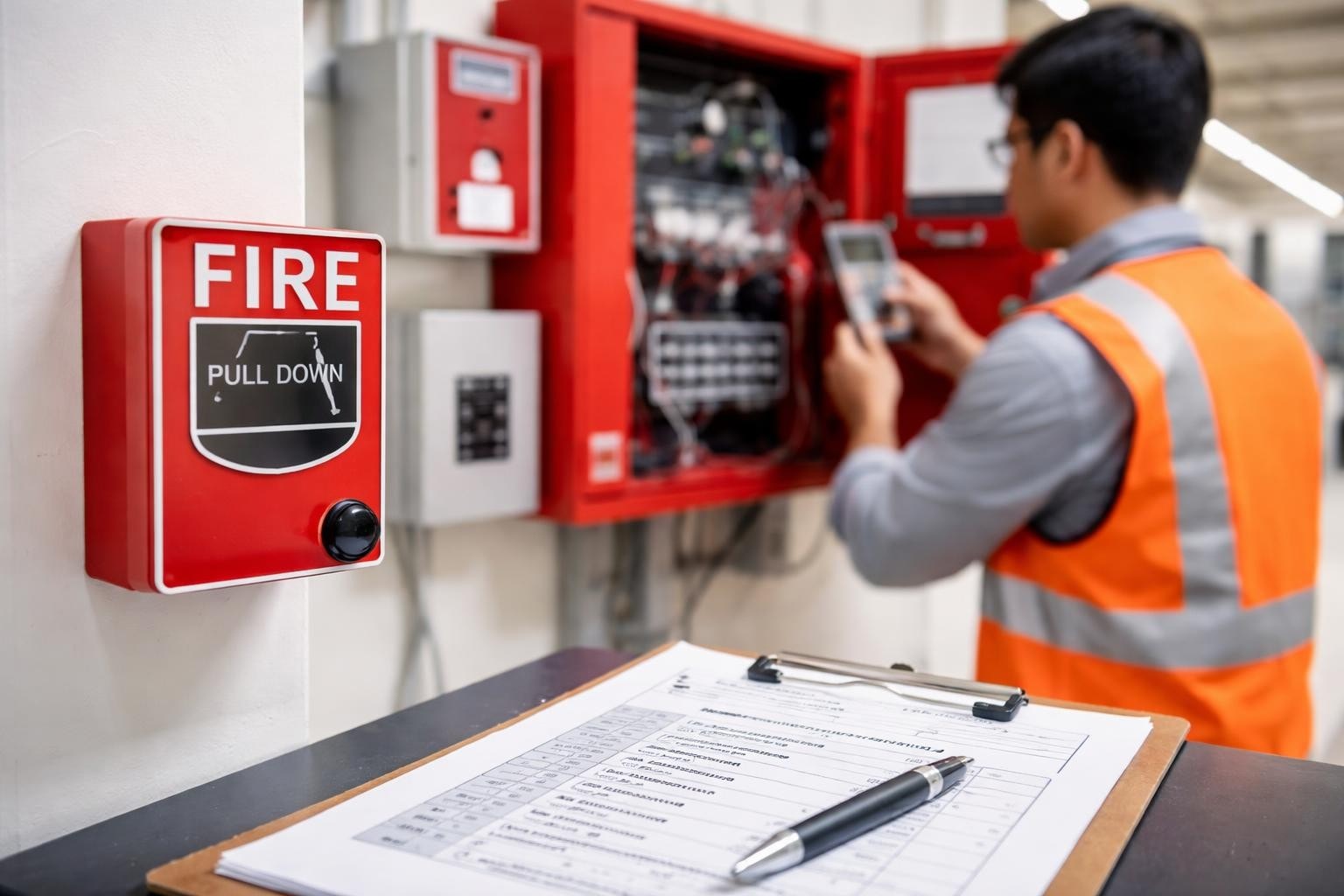
Understanding the fundamentals about fire alarm systems is essential for any business seeking to maintain a safe working environment and meet legal obligations. Fire alarm systems represent one of the most critical components of any comprehensive fire safety strategy, providing early warning capabilities that can save lives and protect property. For commercial premises across the United Kingdom, having appropriate fire detection and alarm systems is not merely a best practice but a legal requirement under the Regulatory Reform (Fire Safety) Order 2005. This guide explores the key considerations about fire alarm installation, maintenance, and compliance that every Responsible Person should understand.
Types of Fire Alarm Systems
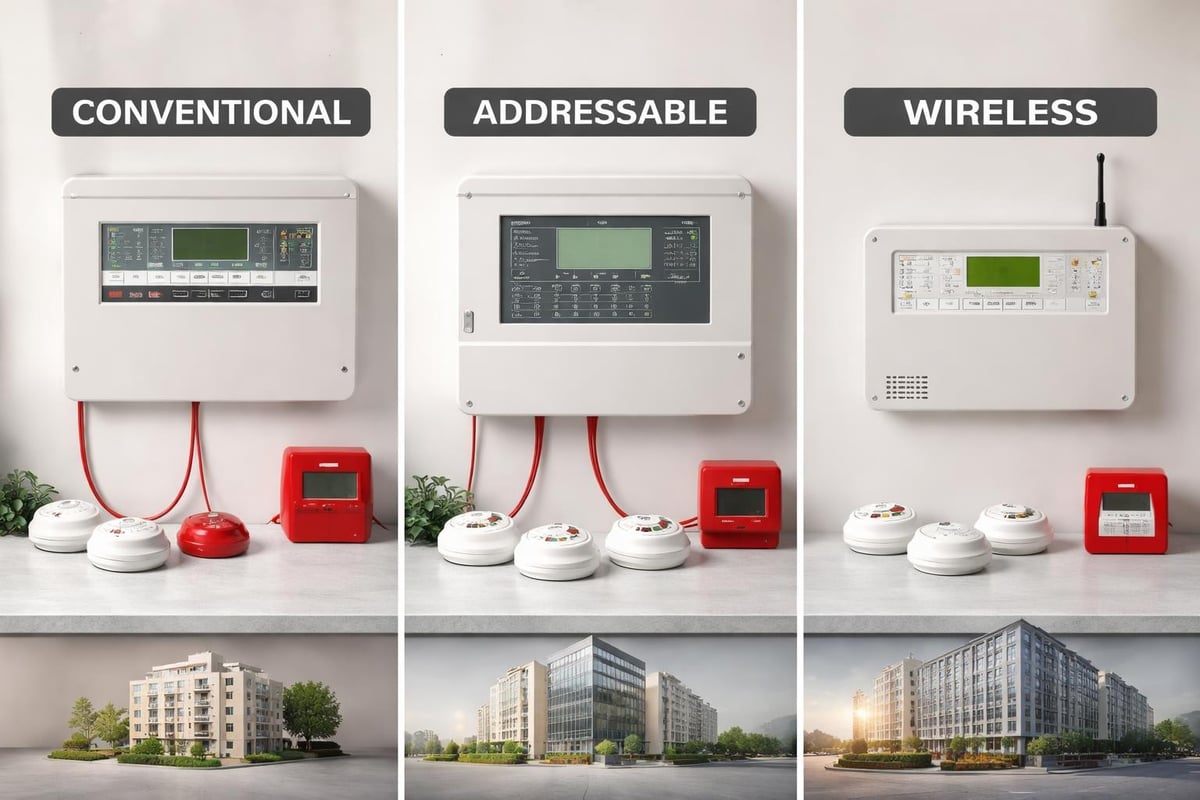
Fire alarm systems vary significantly in their complexity and capabilities, each designed to suit different premises sizes and risk profiles. Conventional systems divide buildings into zones, with detectors grouped together on shared circuits, making them suitable for smaller buildings with straightforward layouts. Addressable systems, conversely, assign unique identifiers to each detection device, enabling precise location identification when an alarm triggers.
Wireless fire alarm systems have gained prominence in recent years, particularly in heritage buildings or premises where cable installation proves problematic. These systems maintain reliability whilst offering installation flexibility that traditional wired systems cannot match.
Manual and Automatic Detection Components
Every comprehensive fire alarm system incorporates both manual and automatic detection elements. Manual call points enable building occupants to raise the alarm immediately upon discovering fire, whilst automatic detectors monitor continuously for signs of combustion.
Automatic detection devices include:
- Smoke detectors using optical or ionisation technology
- Heat detectors responding to temperature thresholds or rates of rise
- Multi-sensor detectors combining smoke and heat detection
- Beam detectors for large open spaces such as warehouses
- Aspirating systems providing earliest possible warning in critical areas
The selection between detection types depends on environmental conditions, ceiling heights, and the nature of activities within each protected space. A comprehensive fire alarm installation considers these variables to ensure optimal coverage.
Legal Requirements and Standards
The legislative framework about fire alarm systems establishes minimum standards that all commercial premises must meet. The Regulatory Reform (Fire Safety) Order 2005 places responsibility on the 'Responsible Person' to ensure appropriate fire detection and warning systems are installed and maintained. This legal duty extends beyond mere installation to encompass regular testing, maintenance, and record-keeping.
British Standard BS 5839-1:2017 provides comprehensive guidance on the design, installation, commissioning, and maintenance of fire detection and fire alarm systems. This standard defines six categories of system, from Category L1 (maximum coverage) through to Category L5 (tailored coverage), alongside Categories M (manual systems) and P (property protection).
| System Category |
Coverage |
Typical Application |
| L1 |
Maximum |
High-risk premises, sleeping accommodation |
| L2 |
Coverage of escape routes plus specific areas |
Mixed-use buildings, offices with specific risks |
| L3 |
Coverage of escape routes only |
Standard commercial premises |
| L4 |
Coverage within circulation spaces |
Small, low-risk premises |
| L5 |
Tailored to specific application |
Determined by fire risk assessment |
Understanding these categories proves essential when determining appropriate provision for your premises. The required category should be identified through a thorough fire risk assessment, which evaluates occupancy characteristics, building layout, and fire hazards.
Fire Alarm Panel Requirements
Fire alarm control panels serve as the system's central processing unit, receiving signals from detection devices and activating warning devices accordingly. These panels must be positioned accessibly for fire service personnel, typically near the main entrance, with clear zone identification enabling rapid incident location.
Modern panels incorporate sophisticated functionality including fault monitoring, system testing capabilities, and integration with other building systems. They must display clear information about system status, faults, and alarm conditions using standardised terminology and indication methods.
Installation Best Practices
Proper installation forms the foundation of effective fire alarm performance. Detection devices must be positioned according to manufacturer specifications and British Standards guidance, accounting for factors such as air movement, heat sources, and potential false alarm triggers.
Smoke detector placement considerations:
- Mount on ceilings or high on walls where smoke naturally accumulates
- Maintain minimum distances from ventilation openings, fans, and air conditioning units
- Avoid areas subject to condensation, steam, or cooking fumes
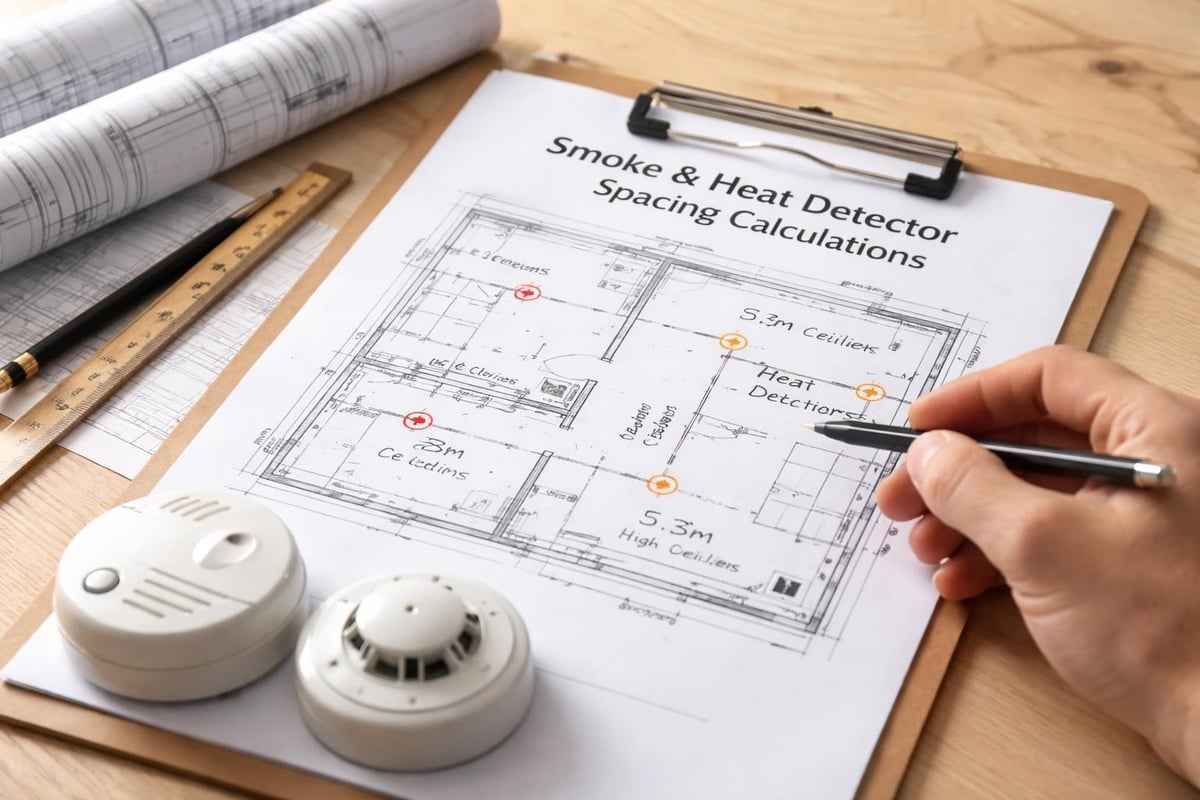
- Position within prescribed spacing limits based on ceiling height and configuration
- Ensure unobstructed detection paths in beam-type installations
Heat detectors require different considerations, being suitable for environments where smoke detectors would generate excessive false alarms. Kitchens, boiler rooms, and dusty environments often necessitate heat detection rather than smoke detection.
The placement and installation of smoke alarms demands careful attention to environmental factors that could compromise performance or create nuisance alarms.
Testing and Maintenance Obligations
Regular testing and maintenance represent fundamental requirements about fire alarm compliance. Weekly testing involves activating different call points on rotation to verify alarm sounders function correctly throughout the premises. This simple procedure, typically conducted by in-house staff, ensures basic operational integrity.
Monthly checks expand upon weekly tests, incorporating inspection of all system components including panel indicators, fault signals, and battery backup systems. These checks verify that the system remains fully operational and capable of responding to fire conditions.
Annual Servicing Requirements
Comprehensive annual servicing by competent technicians examines system performance in detail. This maintenance includes:
- Testing of detection devices using appropriate test equipment
- Verification of control panel functions and programming
- Battery condition assessment and replacement if necessary
- Inspection of cabling, connections, and physical device condition
- Simulation of fault conditions to verify monitoring capabilities
- Documentation of all findings and recommendations
For businesses seeking support with compliance obligations, professional fire alarm testing and maintenance services ensure structured reporting aligned to relevant standards whilst translating technical data into actionable compliance documentation.
The maintenance requirements outlined by fire safety authorities provide detailed schedules ensuring systems receive appropriate attention throughout their operational life.
Documentation and Record-Keeping
Maintaining comprehensive records about fire alarm testing, maintenance, and modifications constitutes a legal requirement. The fire safety logbook should document every test, service visit, fault occurrence, and remedial action taken. These records demonstrate due diligence and provide valuable historical data about system performance.
Essential documentation includes:
- System commissioning certificates and design specifications
- Weekly test records with call point rotation schedules
- Monthly check findings and any defects noted
- Annual service reports with test results and recommendations
- Records of false alarms, investigations, and corrective measures taken
- Modification or upgrade documentation with associated certifications
| Record Type |
Frequency |
Retention Period |
Responsible Party |
| Weekly Tests |
Weekly |
Minimum 12 months |
Designated staff member |
| Monthly Checks |
Monthly |
Minimum 12 months |
Facilities manager |
| Annual Service |
Annually |
Life of system |
Maintenance contractor |
| Modifications |
As required |
Life of system |
Responsible Person |
Digital record systems offer advantages over paper logbooks, providing searchable histories, automated reminders, and simplified reporting for regulatory inspections.
Common Compliance Issues
Numerous premises encounter recurring problems about fire alarm compliance that merit attention. False alarms represent perhaps the most prevalent issue, often resulting from inappropriate detector selection, poor positioning, or inadequate maintenance. High false alarm rates create complacency amongst occupants and place unnecessary demands on fire and rescue services.
Disabled or isolated devices constitute serious compliance breaches. Detectors occasionally require temporary isolation during building works, but forgotten isolations leave premises inadequately protected. Strict procedures governing isolations, including authorisation, documentation, and restoration verification, prevent such lapses.
Inadequate Audibility and Coverage
Warning devices must achieve sufficient sound levels throughout all occupied areas, accounting for background noise and ensuring sleeping occupants will awaken. Inadequate coverage frequently occurs in premises that have undergone alteration without corresponding fire alarm system modifications.
Building modifications demand careful consideration of fire alarm implications. New partitions, changes of use, or occupancy increases may necessitate additional detection devices, revised zoning, or upgraded alarm category provision. The fire safety standards established by regulatory bodies emphasise the importance of maintaining system adequacy as buildings evolve.

Integration with Building Fire Strategy
Fire alarm systems function as one element within broader fire safety strategies. Integration with other protective systems creates comprehensive defence-in-depth approaches. Modern buildings increasingly feature integrated systems where fire alarm activation triggers multiple responses.
Common integrations include:
- Automatic door release mechanisms on fire doors
- Smoke ventilation system activation
- Lift recall to ground floor
- Access control system unlocking of escape routes
- Building management system notifications
- Sprinkler system monitoring and supervision
These integrations require careful design to ensure reliability whilst avoiding inappropriate interactions. For instance, door release mechanisms must function during alarm conditions but maintain security during normal operations.
Understanding how passive fire protection measures interact with active detection systems ensures cohesive fire safety strategies that maximise occupant safety whilst facilitating effective firefighting operations.
Selecting Qualified Installers and Maintainers
The competence of personnel designing, installing, and maintaining fire alarm systems directly impacts life safety outcomes. Third-party certification schemes provide independent verification of company capabilities and technical proficiency.
Reputable installers typically hold certification from recognised bodies such as:
- BAFE SP203-1 for fire alarm design, installation, commissioning, and maintenance
- NSI Gold certification demonstrating quality management and technical competence
- FIA membership indicating adherence to industry standards and continuing professional development
When procuring fire alarm services, verification of appropriate certification provides assurance that work will meet British Standards requirements. Certification schemes mandate regular audits, ensuring companies maintain standards consistently rather than merely at certification assessment.
Future Developments and Smart Technology
Technological advancement continues reshaping fire detection capabilities. Artificial intelligence algorithms now analyse detector signals to distinguish genuine fire conditions from false alarm sources with increasing accuracy. Cloud-based monitoring enables real-time system supervision and predictive maintenance scheduling based on performance data analysis.
Wireless mesh networks offer unprecedented installation flexibility whilst maintaining the reliability traditionally associated with hard-wired systems. Battery technology improvements extend device lifespan, reducing maintenance demands and lifecycle costs.
Integration with building information modelling (BIM) streamlines system design, enabling virtual testing and optimisation before physical installation commences. These digital tools enhance design accuracy whilst facilitating future maintenance through comprehensive as-built documentation.
Training and Awareness
Technical systems alone cannot guarantee safety; occupant awareness and appropriate responses prove equally vital. Regular fire drills familiarise building users with alarm sounds and evacuation procedures, whilst fire safety training ensures staff understand their roles during emergencies.
Responsible Persons should ensure all employees receive:
- Induction training covering alarm sounds and evacuation routes
- Periodic refresher training maintaining awareness
- Role-specific instruction for fire wardens and designated personnel
- Understanding of weekly testing procedures to prevent confusion
- Clear guidance about responding to alarm activations
False alarm investigations should incorporate educational elements, addressing behaviours or activities that contributed to unnecessary activations. This approach reduces recurrence whilst maintaining vigilance rather than breeding complacency.
Cost Considerations and Budgeting
Financial planning for fire alarm systems must account for both capital and operational expenditure. Initial installation costs vary considerably based on building size, system complexity, and chosen technology. Addressable systems command higher upfront costs than conventional alternatives but offer operational advantages and enhanced functionality.
Ongoing costs encompass routine testing (often absorbed within existing staff duties), professional maintenance contracts, and periodic component replacement. Battery replacement typically occurs at three to five-year intervals, whilst detector replacement becomes necessary after approximately ten years of service.
| Cost Element |
Typical Lifespan |
Budget Consideration |
| System Installation |
15-20 years |
Capital expenditure |
| Control Panel |
10-15 years |
Replacement planning |
| Detection Devices |
10 years |
Programmed replacement |
| Batteries |
3-5 years |
Annual maintenance budget |
| Sounder Devices |
15+ years |
Replacement as required |
Viewing fire alarm expenditure as essential infrastructure investment rather than discretionary spending aligns with prudent risk management and legal compliance obligations.
Alarm Verification and False Alarm Reduction
Sophisticated verification technologies reduce false alarms without compromising genuine fire detection. Coincidence detection requires multiple detectors to activate before triggering full alarm conditions, whilst multi-sensor devices analyse multiple phenomena before confirming fire presence.
Programmable delays allow investigation of initial activations before evacuating premises, though such approaches require careful risk assessment and may not suit all occupancies. Premises with vulnerable occupants typically require immediate evacuation upon any alarm activation.
The balance between rapid warning and false alarm minimisation demands thoughtful system design informed by occupancy characteristics and operational patterns. Regular review of alarm data identifies patterns warranting investigation, such as specific zones experiencing repeated activations.
Maintaining detailed records about fire alarm performance enables trend analysis and informed decision-making about system modifications or operational procedure adjustments. The comprehensive guidance available through fire safety system maintenance resources emphasises preventive approaches that maintain reliability whilst controlling costs.
Responsibilities During Building Alterations
Building works present particular challenges for fire alarm system integrity and operational continuity. Hot works generate smoke and heat that may trigger detectors, whilst structural modifications can damage cabling or render existing coverage inadequate.
Before commencing alterations, Responsible Persons must:
- Notify the alarm monitoring company of planned works
- Assess whether temporary additional coverage becomes necessary
- Establish isolation and reinstatement procedures
- Brief contractors about system presence and protection requirements
- Plan for testing and verification following works completion
Comprehensive project planning ensures fire safety remains uncompromised throughout construction or refurbishment activities. Post-completion commissioning verifies that all system elements function correctly and coverage remains appropriate for modified spaces.
Monitoring and Remote Supervision
Connection of fire alarm systems to alarm receiving centres provides continuous supervision and immediate emergency service notification. Monitored systems offer particular value in unoccupied premises or during out-of-hours periods when immediate human response may not occur.
Modern IP-based monitoring delivers enhanced functionality compared to traditional telephone line connections, transmitting detailed diagnostic information alongside alarm signals. This connectivity enables remote fault diagnosis and predictive maintenance scheduling based on performance anomalies.
Monitoring arrangements must address potential communication path failures through redundant signalling routes ensuring alarm transmission reliability. Regular testing of monitoring connections verifies end-to-end functionality from detector activation through to alarm receiving centre signal reception.
Understanding the comprehensive standards governing fire alarm systems provides context for the sophisticated technologies now available and the rigorous requirements they must satisfy.
Effective fire alarm systems combine appropriate technology, professional installation, diligent maintenance, and informed building management to deliver reliable early warning capabilities. Understanding these elements about fire alarm compliance enables Responsible Persons to fulfil legal obligations whilst creating genuinely safer environments. Whether you require expert assessment of existing systems, professional installation, or ongoing maintenance support, Firesurv Group Ltd provides comprehensive fire safety services across the United Kingdom, helping businesses maintain compliance and protect their people and property.