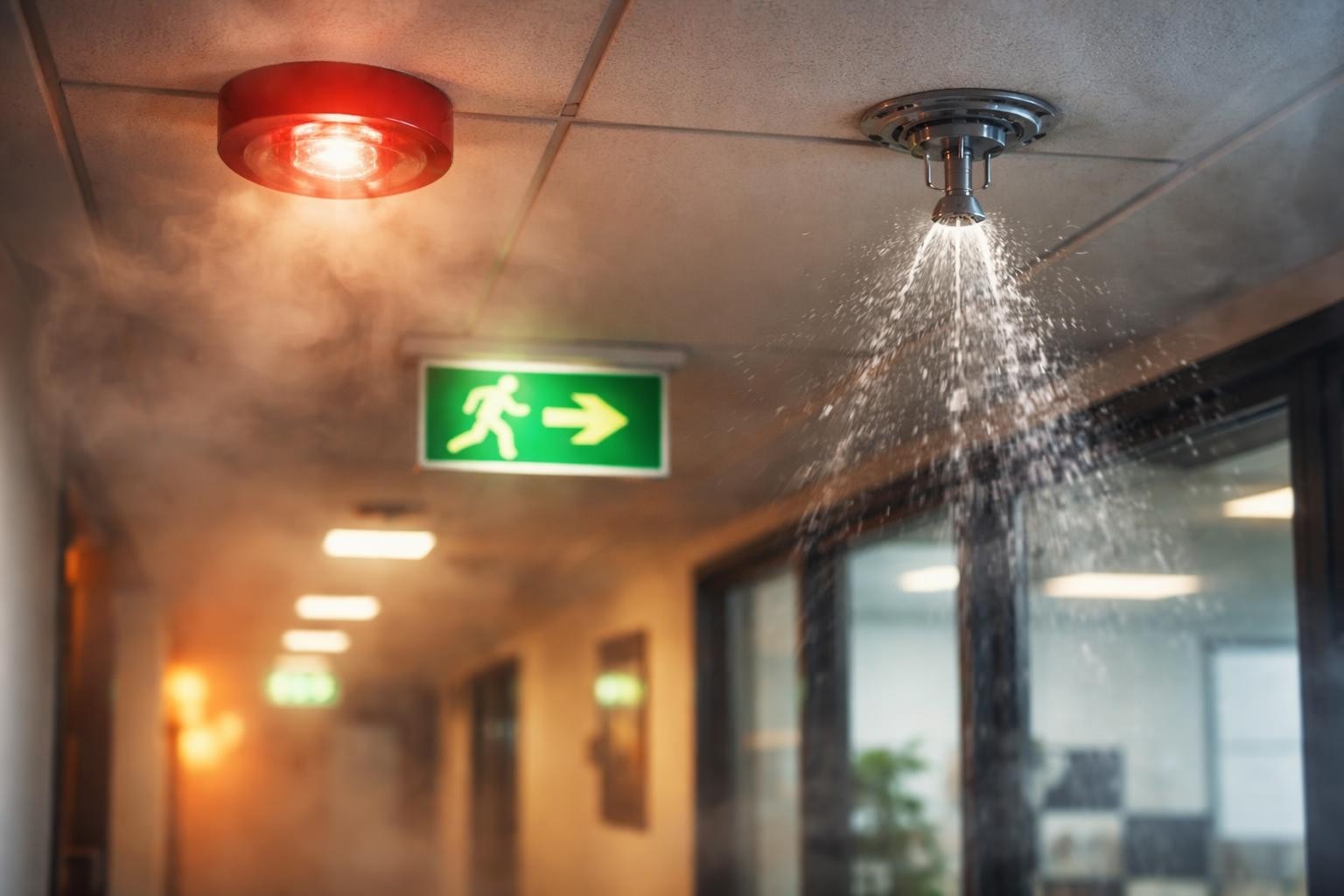
Active fire safety represents the critical first line of defence in protecting lives and property from fire hazards. Unlike passive measures that contain and slow fire spread through structural means, active systems detect, suppress, and control fires through mechanical or electrical intervention. These technologies work continuously to monitor environments, alert occupants, and actively combat flames before they escalate into catastrophic events. Understanding how active fire safety integrates within comprehensive protection strategies remains essential for businesses seeking compliance with UK fire safety legislation and safeguarding their operations.
Understanding Active Fire Safety Systems
Active fire safety encompasses all systems and equipment that require some form of activation, whether automatic or manual, to function during a fire emergency. These systems actively respond to fire conditions through detection, suppression, or notification mechanisms. The distinction between active and passive measures forms the foundation of modern fire protection philosophy.
Key active fire safety components include:
- Fire detection and alarm systems
- Automatic sprinkler installations
- Gaseous suppression systems
- Emergency lighting networks
- Smoke control and extraction systems
- Fire extinguishers and hose reels
Each component serves a specific purpose within the broader protection framework. Detection systems identify fire signatures through heat, smoke, or flame sensors. Suppression systems discharge water, foam, or gas to extinguish or control fires. Notification systems alert occupants and emergency services to enable swift evacuation and response.
The Role of Fire Detection Technology
Modern fire detection technology represents the cornerstone of active fire safety strategies. Advanced sensors continuously monitor environments for early warning signs of combustion. Heat detectors respond to temperature increases or rates of rise, whilst smoke detectors identify particulate matter from smouldering or flaming fires. Beam detectors protect large open spaces, and aspirating systems provide ultra-early warning in high-value environments.
The National Fire Protection Association (NFPA) establishes comprehensive standards for detection system design and installation. These guidelines ensure appropriate coverage, sensitivity settings, and integration with other building systems. Proper detector placement considers ceiling height, airflow patterns, and potential interference sources to minimise false alarms whilst maintaining rapid detection capability.
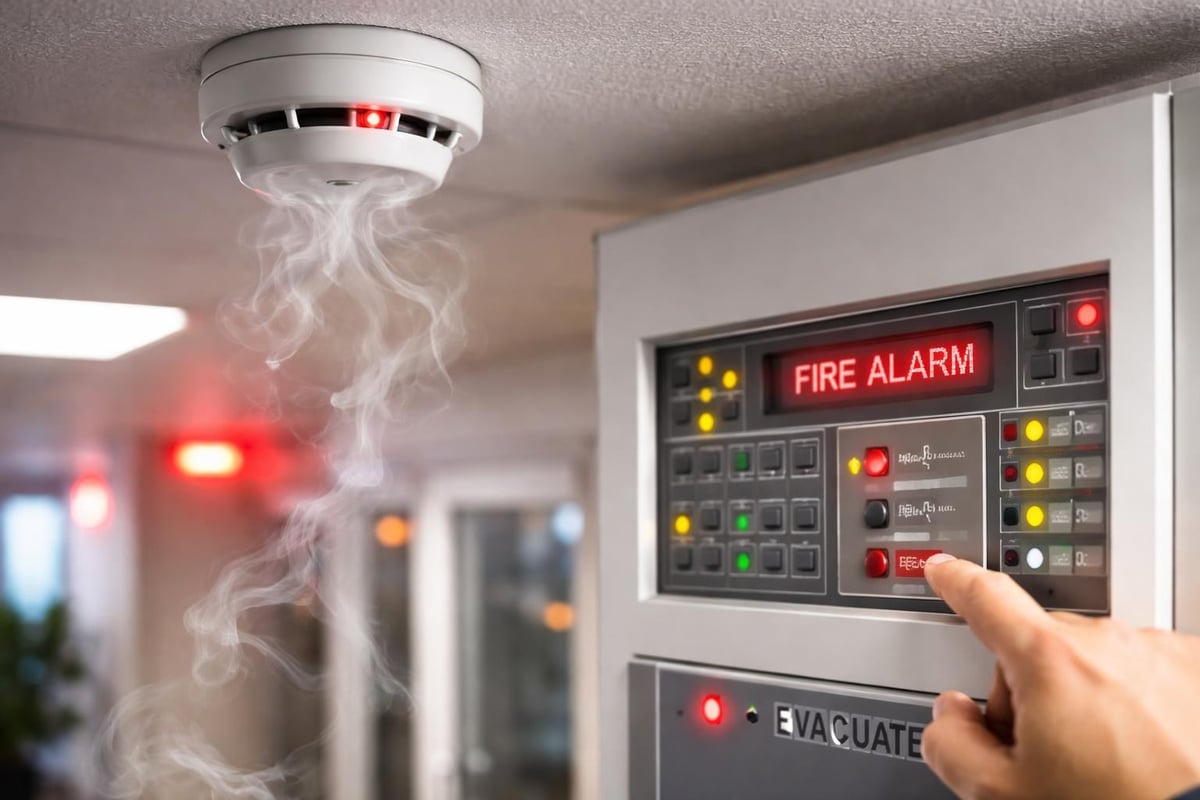
Detection systems connect to central control panels that process signals, determine appropriate responses, and activate connected devices. Modern addressable systems pinpoint exact detector locations, enabling faster emergency response. Integration with building management systems allows coordinated actions including elevator recall, door release, and HVAC shutdown.
Automatic Sprinkler Systems and Water-Based Suppression
Automatic sprinkler systems remain the most effective active fire safety technology for life protection and property conservation. Statistics consistently demonstrate that properly designed and maintained sprinkler systems control or extinguish fires in over 95% of activations. Water discharge begins automatically when individual sprinkler heads detect sufficient heat, limiting fire spread whilst occupants evacuate.
| Sprinkler System Type |
Application |
Activation Method |
Coverage |
| Wet Pipe |
Heated buildings |
Heat-sensitive bulb |
Individual heads |
| Dry Pipe |
Unheated spaces |
Compressed air release |
Zone-based |
| Pre-action |
High-value areas |
Detection + heat |
Controlled discharge |
| Deluge |
High-hazard zones |
Detection signal |
Simultaneous all heads |
Different system configurations address specific risk profiles and environmental conditions. Wet pipe systems offer the fastest response, maintaining water under pressure within distribution piping. Dry pipe systems protect unheated warehouses and car parks where freezing presents concerns. Pre-action systems require both detection activation and individual sprinkler head operation, preventing accidental discharge in sensitive environments like archives or data centres.
Design calculations determine sprinkler head spacing, pipe sizing, and water supply requirements based on occupancy classification and hazard level. The U.S. Fire Administration provides valuable research on sprinkler system performance across various building types. Regular inspection and testing ensure system reliability, with annual main drain tests and quarterly alarm valve checks forming part of comprehensive maintenance programmes.
Water Mist and Alternative Suppression Technologies
Water mist systems offer advanced suppression capabilities using significantly less water than conventional sprinklers. Fine droplets create cooling effects whilst displacing oxygen, making them suitable for electrical rooms, heritage buildings, and marine applications. Reduced water damage and lower infrastructure demands make water mist attractive for retrofit installations.
Gaseous suppression systems protect environments where water discharge would cause unacceptable damage or where rapid fire knockdown proves critical. Clean agent systems discharge inert gases or chemical compounds that suppress combustion without leaving residue. These systems commonly protect server rooms, telecommunications facilities, and museum collections.
Fire Alarm Systems and Emergency Notification
Comprehensive fire alarm systems integrate detection, notification, and control functions to manage emergency response. Modern installations comply with BS 5839 standards, which categorise systems from L1 through L5 based on coverage extent and protection objectives. L1 systems provide maximum detection coverage throughout buildings, whilst L5 systems offer localised protection in specific zones.
Essential alarm system components include:
- Detection devices (smoke, heat, multi-sensor)
- Manual call points at exit routes
- Alarm sounders and visual indicators
- Control and indicating equipment
- Power supplies (mains and battery backup)
- Remote monitoring and transmission equipment
Effective alarm systems deliver clear, unmistakable notification that prompts immediate evacuation. Sounder placement ensures audibility in all occupied areas, accounting for ambient noise levels and occupant characteristics. Visual alarm devices (VADs) comply with equality legislation, ensuring notification reaches hearing-impaired occupants. As outlined in OSHA fire safety resources, workplace fire alarm systems must integrate with evacuation procedures and staff training programmes.
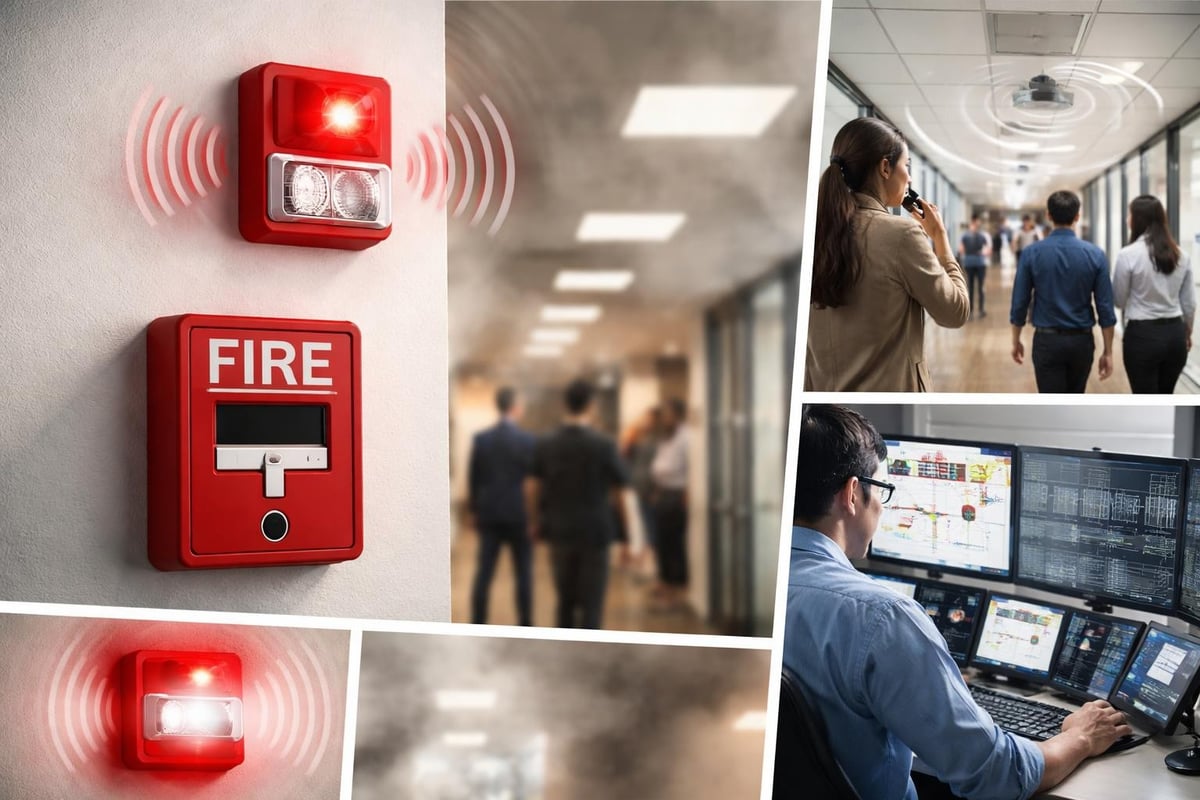
Businesses requiring fire alarm installation should engage qualified professionals who understand detection zone design, cause-and-effect programming, and integration requirements. Proper commissioning includes witness testing, documentation handover, and user training to ensure responsible persons understand system operation and maintenance obligations.
Emergency Lighting and Wayfinding Systems
Emergency lighting represents a critical active fire safety component that enables safe evacuation when normal lighting fails. Self-contained luminaires or central battery systems illuminate escape routes, fire-fighting equipment locations, and safety signs. UK regulations mandate emergency lighting in virtually all non-domestic premises, with specific duration and illumination level requirements.
Modern emergency lighting employs LED technology offering extended battery life, reduced maintenance, and improved reliability. Addressable systems enable remote monitoring and automated testing, reducing inspection burdens whilst ensuring compliance. Dynamic wayfinding systems adapt exit route guidance based on fire location, directing occupants away from danger zones towards safe exits.
Integrated Active Fire Safety Strategies
Effective fire protection requires coordinated integration of multiple active systems working in concert with passive measures. A well-designed strategy ensures detection triggers appropriate suppression whilst simultaneously alerting occupants and emergency services. System integration allows sophisticated responses including staged alarm sequences, pressurisation system activation, and smoke extraction coordination.
Building management systems increasingly incorporate fire safety functions, enabling centralised monitoring and control. Integration allows automatic actions such as:
- Elevator recall to designated floors
- HVAC system shutdown to prevent smoke circulation
- Magnetic door holder release to close fire doors
- Access control override for emergency egress
- CCTV redirection to alarm zones
The National Institute of Standards and Technology conducts extensive research on fire dynamics and system performance, informing integration strategies that optimise protection outcomes. This research demonstrates how coordinated active and passive measures achieve superior performance compared to individual systems operating independently.
| Integration Benefit |
Active System |
Passive Complement |
Combined Outcome |
| Early Warning |
Smoke detection |
Compartmentation |
Contained spread + rapid notification |
| Suppression |
Sprinkler activation |
Fire-resistant construction |
Controlled fire + structural protection |
| Evacuation |
Emergency lighting |
Protected stairways |
Safe egress routes maintained |
| Response |
Alarm transmission |
Fire service access |
Faster intervention + better information |
Businesses must ensure their active fire safety provisions align with comprehensive fire risk assessments that identify specific hazards and protection requirements. These assessments inform system selection, design parameters, and maintenance frequencies to address identified risks effectively.
Maintenance and Testing Requirements
Active fire safety systems demand rigorous maintenance regimes to ensure operational reliability when needed. Unlike passive measures that function through inherent properties, active systems contain mechanical, electrical, and electronic components susceptible to failure without proper upkeep. UK legislation places maintenance responsibilities squarely on duty holders and responsible persons.
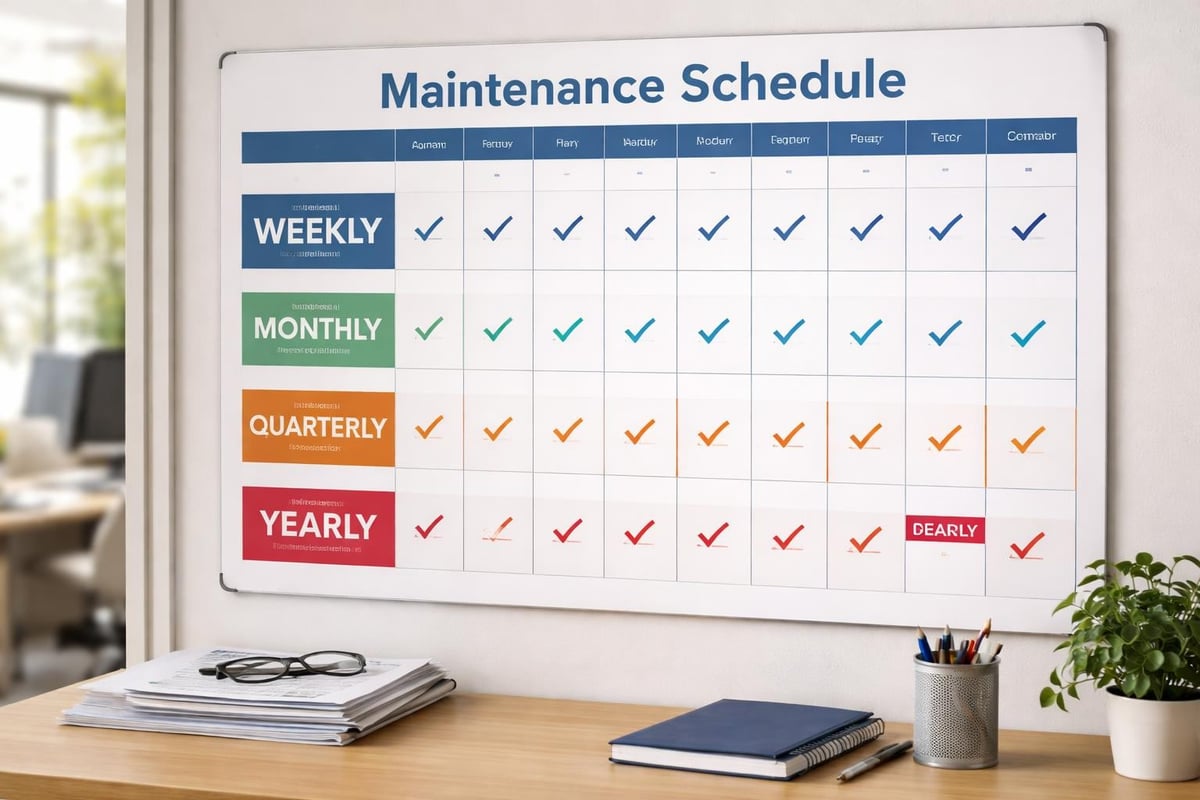
Typical maintenance frequencies include:
- Weekly fire alarm panel checks and battery tests
- Monthly emergency lighting functional tests
- Quarterly sprinkler system inspections
- Annual full-discharge tests for suppression systems
- Five-yearly extended duration emergency lighting tests
Competent persons must conduct all testing and maintenance activities, with detailed records maintained throughout system lifecycles. The Fire and Rescue Service User Group provides guidance on maintaining various fire protection systems to regulatory standards. Documentation demonstrates due diligence and supports compliance evidence during regulatory inspections.
System faults require prompt remediation to restore full protection capability. Organisations should establish response protocols ensuring critical defects receive immediate attention whilst lower-priority issues follow structured resolution timescales. Temporary compensatory measures, such as fire watches or enhanced evacuation procedures, may prove necessary when systems undergo extended repairs.
Training and Competency Development
Effective active fire safety extends beyond hardware installation to encompass human factors and operational preparedness. Staff require training on system operation, alarm response procedures, and equipment usage. Fire marshals need enhanced instruction covering evacuation coordination, assembly point management, and emergency service liaison.
Regular fire drills test both system performance and occupant response, identifying weaknesses before real emergencies occur. Drill observations should evaluate alarm audibility, evacuation timing, and any confusion regarding escape routes or assembly procedures. Findings inform training updates and procedural refinements to enhance overall preparedness. Resources from NIST fire research programmes help organisations develop evidence-based training content addressing human behaviour during fire emergencies.
Organisations offering comprehensive fire safety training help businesses develop competent teams capable of managing fire safety responsibilities effectively. Training should address legal obligations, risk assessment principles, and practical skills including extinguisher operation and evacuation management.
Regulatory Compliance and Standards
Active fire safety systems must comply with multiple regulatory frameworks governing design, installation, and maintenance. The Regulatory Reform (Fire Safety) Order 2005 establishes overarching duties for responsible persons in England and Wales, requiring adequate fire precautions including detection and warning systems. Similar legislation applies across Scotland and Northern Ireland.
British Standards provide technical specifications for various active systems:
- BS 5839 (fire detection and alarm systems)
- BS EN 12845 (automatic sprinkler systems)
- BS 5266 (emergency lighting)
- BS 7273 (code of practice for the operation of fire protection measures)
Building regulations through Approved Document B specify when particular systems become mandatory based on building use, occupancy levels, and structural characteristics. New construction and material alterations trigger enhanced protection requirements, often necessitating comprehensive active fire safety installations.
Insurance providers increasingly mandate specific protection measures as policy conditions. Sprinkler systems, early warning detection, and monitoring connections may secure premium reductions whilst demonstrating risk management commitment. The Safer Buildings Coalition offers resources on fire safety requirements for various building types and occupancies.
Third-party certification schemes provide independent verification of system design and installation quality. BAFE, FIRAS, and LPCB schemes assess contractor competence and installation compliance, giving building owners confidence in system reliability. Certified installations typically prove more acceptable to insurers and regulatory authorities.
Emerging Technologies and Future Developments
Active fire safety continues evolving through technological advancement and enhanced understanding of fire behaviour. Artificial intelligence and machine learning algorithms improve detection accuracy, reducing false alarms whilst maintaining sensitivity to genuine threats. Multi-sensor devices analyse multiple parameters simultaneously, distinguishing between fire signatures and nuisance sources like cooking or steam.
Wireless technology eliminates installation constraints in heritage buildings and retrofit applications. Battery-powered devices communicate via mesh networks, enabling comprehensive coverage without disruptive cabling works. Cloud-based monitoring platforms provide real-time system status visibility, enabling proactive maintenance and immediate fault notification.
Innovation areas shaping active fire safety include:
- Video smoke detection using computer vision
- Acoustic-based fire detection analysing combustion sounds
- Nano-technology suppressants offering enhanced performance
- Internet of Things integration for predictive maintenance
- Augmented reality for training and emergency response
Research continues into human behaviour during emergencies, informing alarm design and evacuation procedures. Studies demonstrate that voice alarm messages produce faster, more orderly evacuations compared to traditional sounders. Personalised evacuation assistance for mobility-impaired occupants uses technology to guide individuals to refuges or accessible exits.
The Florida Department of Financial Services maintains updated information on emerging fire safety technologies and their applications. As climate change increases fire risk globally, active fire safety innovations will prove increasingly vital for protecting lives and property.
Cost-Benefit Considerations
Investment in active fire safety delivers substantial returns through loss prevention, insurance benefits, and regulatory compliance. Whilst initial installation costs appear significant, the potential consequences of inadequate protection far exceed upfront expenditure. A single major fire can destroy businesses, cause fatalities, and generate massive liability exposure.
Financial analysis should consider both direct costs (equipment, installation, maintenance) and indirect benefits (reduced insurance premiums, business continuity protection, enhanced property values). Sprinkler systems typically add 1-2% to new construction costs whilst providing comprehensive protection throughout building lifecycles. Detection and alarm systems represent minimal expenditure relative to building values and contents.
Maintenance costs remain predictable through planned programmes, allowing accurate budgeting. Unexpected failures and emergency repairs prove more expensive than proactive upkeep, reinforcing the value of scheduled maintenance investments. Extended equipment lifecycles result from proper care, deferring replacement costs and maximising return on initial investments.
Organisations should view active fire safety as risk mitigation investment rather than regulatory burden. The Texas Commission on Fire Protection provides research demonstrating the economic benefits of comprehensive fire protection systems across various sectors. Protection enables business continuity, preserves employment, and safeguards community resources, creating value extending beyond individual organisations.
Active fire safety systems form an indispensable element of comprehensive protection strategies, working alongside passive measures to detect threats early and respond effectively. Modern technologies offer unprecedented reliability and integration capabilities, ensuring buildings maintain robust defences against fire emergencies. Whether you need expert guidance on system selection, professional installation, or ongoing maintenance support, Firesurv Group Ltd delivers comprehensive fire safety solutions tailored to your specific requirements. Contact our experienced team today to discuss how we can enhance your active fire safety provisions and ensure full compliance with UK legislation.