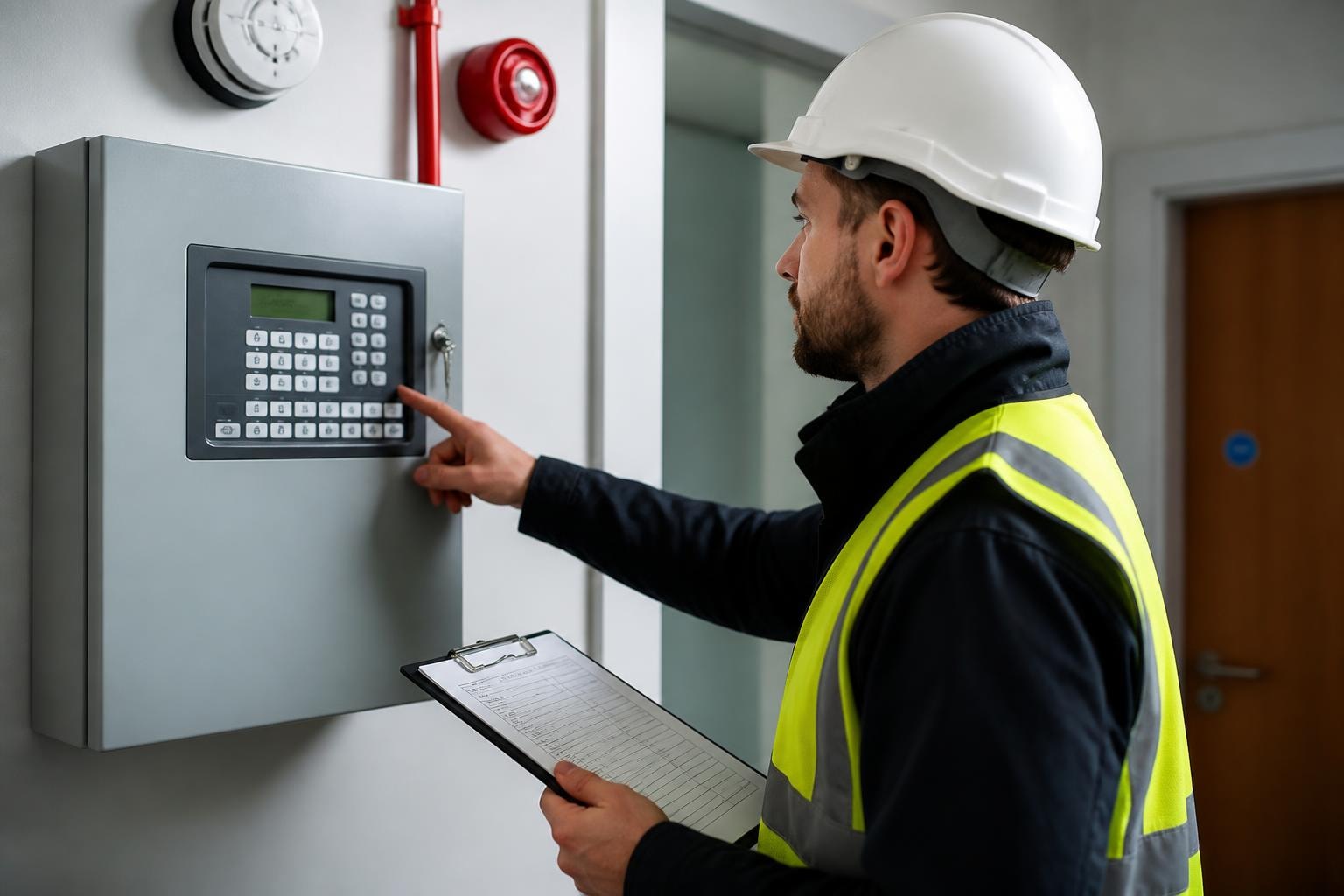
Fire alarm systems represent one of the most critical components of any building's life-safety infrastructure, yet they only function effectively when properly maintained and inspected. Regular fire alarm inspection ensures that detection, notification, and control components work together seamlessly when seconds count. For businesses operating across the United Kingdom, understanding inspection requirements isn't just about regulatory compliance; it's about protecting lives, preserving property, and maintaining operational continuity. This comprehensive guide examines the standards, schedules, and best practices that underpin effective fire alarm system maintenance.
Understanding Fire Alarm Inspection Requirements
Fire alarm inspection forms part of a broader inspection, testing, and maintenance (ITM) regime that ensures life-safety systems remain operational throughout their service life. Under the Regulatory Reform (Fire Safety) Order 2005, the Responsible Person must ensure fire safety equipment, including alarm systems, receives appropriate maintenance to keep it in efficient working order.
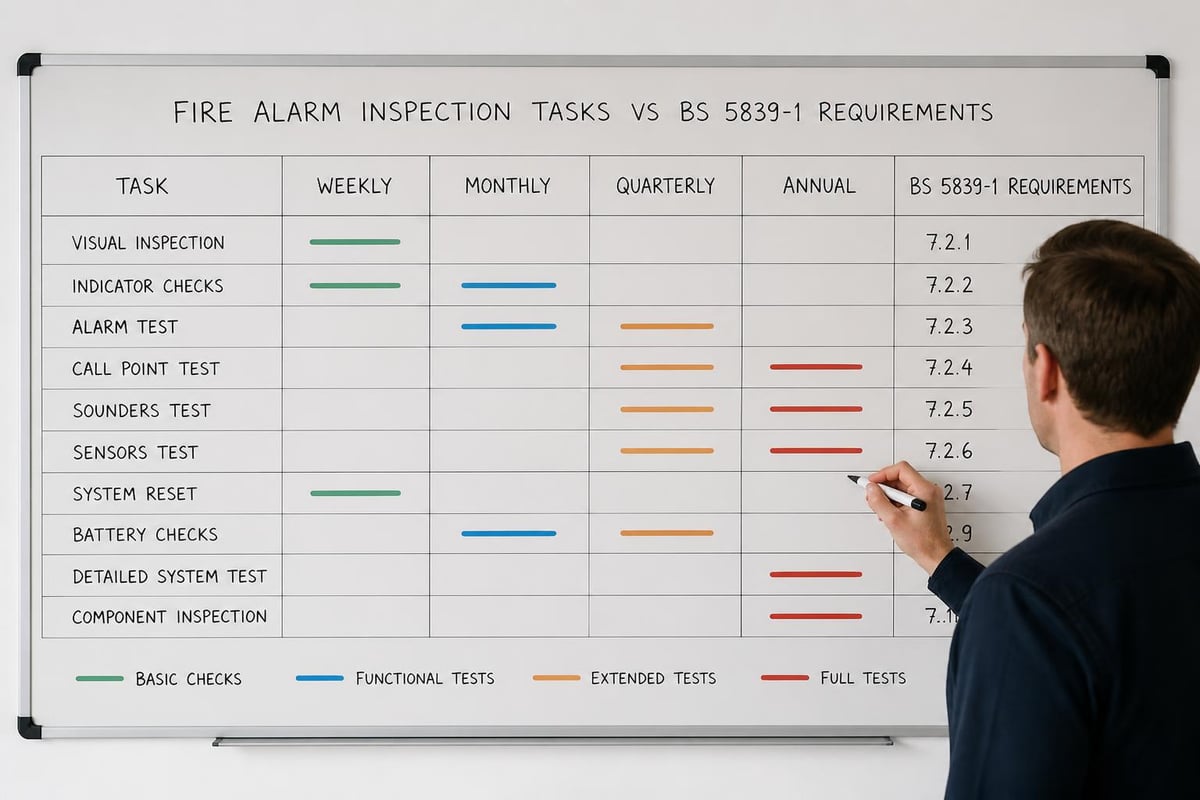
British Standard BS 5839-1:2017 provides the primary framework for fire detection and alarm systems in non-domestic premises. This standard establishes inspection frequencies and procedures that align with the risk profile of individual buildings. The code distinguishes between different levels of scrutiny, from simple visual checks to comprehensive functional testing.
Key inspection categories include:
- Weekly visual inspections of control panels and standby power indicators
- Monthly activation testing using different call points
- Quarterly checks of battery condition and system records
- Annual comprehensive testing of all components and backup power supplies
- Specialist third-party certification at defined intervals
The importance of regular fire alarm inspections extends beyond simple box-ticking. Systematic checks identify deterioration before it compromises system integrity, ensuring that detection and notification occur when fire conditions develop.
Components Examined During Fire Alarm Inspection
A thorough fire alarm inspection addresses every element within the detection and notification network. Control panels receive particular attention as the central intelligence of the system, with inspectors verifying power supplies, fault indicators, and zone identification.
Detection Devices
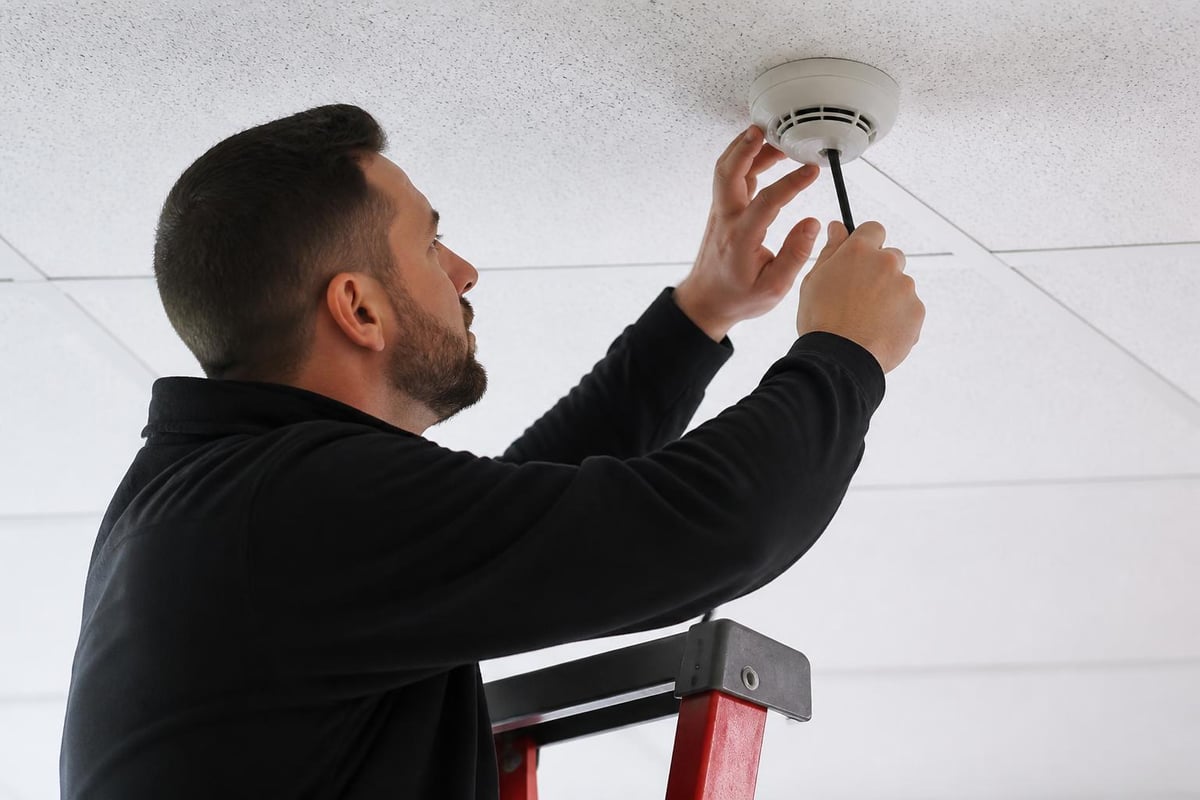
Smoke detectors, heat sensors, and multi-sensor devices require individual verification to confirm proper operation. Inspectors test each device's sensitivity, cleanliness, and response characteristics. Accumulated dust, paint overspray, or environmental contamination can significantly impair detector function, making visual and functional testing essential.
Manual call points, often termed break-glass units, must operate smoothly when activated. Each point should trigger the correct zone indication at the control panel and initiate the appropriate alarm sequence throughout the building.
Notification Appliances
Sounders, bells, and visual alarm devices (VADs) must deliver adequate coverage throughout protected areas. Inspection checklists typically cover audibility levels, visual indicator brightness, and synchronisation between devices. Notification appliances in challenging environments-such as high-noise areas or zones requiring disability discrimination compliance-demand special consideration.
| Component Type |
Inspection Focus |
Typical Frequency |
| Control Panel |
Power, faults, display functionality |
Weekly visual, annual test |
| Smoke Detectors |
Sensitivity, cleanliness, response |
Annual functional test |
| Heat Detectors |
Activation temperature, physical condition |
Annual functional test |
| Manual Call Points |
Operation, glass condition, signage |
Monthly activation test |
| Sounders/Bells |
Audibility, synchronisation |
Annual test |
| Visual Alarms |
Brightness, synchronisation |
Annual test |
| Batteries |
Voltage, capacity, condition |
Quarterly check, annual load test |
Communication pathways between components warrant careful examination. Wiring integrity, connection security, and signal transmission all affect system reliability during emergency conditions.
Establishing an Effective Inspection Schedule
Creating a compliant inspection programme requires balancing regulatory requirements with operational practicality. The frequency of fire alarm inspection activities varies according to system complexity, building occupancy, and environmental factors.
Weekly inspections typically involve designated staff conducting visual checks of the main control panel. These brief examinations confirm normal operation indicators, verify standby power status, and ensure no fault conditions exist. Documentation of these checks provides evidence of ongoing diligence.
Monthly testing introduces an operational element by activating the system from different call points or zones. Rotating the test location each month ensures comprehensive coverage whilst verifying that detection translates into proper notification. This testing also familiarises occupants with alarm sounds and evacuation procedures.
Annual comprehensive testing encompasses:
- Full functional testing of every detector, call point, and notification device
- Battery load testing and backup power verification
- Control panel programming and fault indication checks
- Communication pathway integrity testing
- Documentation review and compliance verification
Many organisations engage specialist contractors for annual testing, ensuring technical expertise and independent verification. Fire alarm installation, testing and maintenance services translate complex technical logs into structured compliance reports that satisfy regulatory requirements whilst identifying necessary remedial actions.
Documentation and Record-Keeping Requirements
Comprehensive documentation transforms inspection activities into defensible evidence of compliance. Fire alarm inspection records must capture sufficient detail to demonstrate system integrity whilst remaining accessible for review by enforcement authorities, insurers, and facility managers.
The logbook system provides the traditional foundation for fire alarm documentation. British Standard BS 5839-1 recommends maintaining a dedicated logbook at the premises, recording all inspections, tests, faults, and remedial work. Digital alternatives increasingly supplement or replace physical logbooks, offering enhanced searchability and backup security.
Essential Documentation Elements
Each inspection record should identify the person conducting the check, the date and time of the inspection, and the specific components examined. Fault conditions require detailed description, including the location, nature, and severity of the deficiency. Corrective actions taken, and any outstanding issues must appear clearly within the documentation trail.
Technical test results benefit from standardised formatting that facilitates trend analysis. Battery voltage readings, detector sensitivity measurements, and sounder decibel levels provide quantifiable evidence of system condition when recorded consistently over time. Detailed fire alarm inspection reports should verify system functionality whilst highlighting compliance with relevant standards.
Maintenance contracts and warranty information form part of the broader documentation ecosystem. These records establish the competence of service providers and demonstrate that qualified personnel conduct complex testing procedures.
Common Deficiencies Identified During Inspections
Regular fire alarm inspection reveals recurring issues that compromise system effectiveness. Understanding these common deficiencies helps facility managers implement preventive measures and prioritise remedial work.
Battery failures represent perhaps the most frequent inspection finding. Standby power sources degrade over time, with capacity diminishing long before complete failure occurs. Annual load testing identifies batteries approaching end-of-life before they compromise system operation during mains power loss.
Detector contamination affects alarm sensitivity and reliability. Dust accumulation, paint particles, and insect debris alter detector response characteristics, potentially causing false alarms or delayed activation. Environmental monitoring during building works helps prevent contamination, whilst regular cleaning maintains optimal performance.
Physical damage to notification devices frequently results from workplace activities or deliberate interference. Broken call point glass, damaged sounder grilles, and obscured visual alarms undermine the system's ability to alert occupants effectively.
Configuration issues include:
- Incorrect zone labelling at control panels
- Disabled detectors not reinstated after maintenance work
- Incompatible component replacements following repairs
- Outdated programming not reflecting building layout changes
Isolation of system sections for maintenance or building works creates particular risk if devices aren't reinstated promptly. Inspection procedures should verify that all zones show active status unless legitimately isolated with appropriate documentation.
Integration with Broader Fire Safety Management
Fire alarm inspection doesn't exist in isolation but forms one element within comprehensive fire safety management. The effectiveness of detection systems depends on coordinated fire protection measures, evacuation procedures, and ongoing risk management.
Fire risk assessments establish the appropriate level of fire alarm provision for individual premises, considering occupancy characteristics, building construction, and fire load. Inspection findings feed back into risk assessment reviews, potentially identifying changes in building use or configuration that affect fire safety requirements.
Compartmentation integrity directly influences alarm system design. Fire-resisting construction contains fire development, providing time for detection, notification, and evacuation. Coordination between passive fire protection measures and active detection systems creates defence-in-depth that maximises occupant safety.
Staff training ensures that alarm activations trigger appropriate responses. Regular fire drills test the human dimension of fire safety, whilst inspection of alarm systems addresses the technical components. Together, these elements create robust emergency preparedness.

Regulatory Framework and Enforcement
The Regulatory Reform (Fire Safety) Order 2005 establishes legal duties for fire alarm inspection across England and Wales, with parallel legislation applying in Scotland and Northern Ireland. Responsible Persons must ensure appropriate inspection, testing, and maintenance of fire safety equipment, with enforcement authorities possessing extensive powers to verify compliance.
Fire and Rescue Service inspectors examine fire alarm documentation during premises inspections, seeking evidence of regular testing and appropriate remedial action. Inadequate inspection records may result in enforcement notices, prohibition orders, or prosecution in severe cases. Inspection, testing, and maintenance requirements apply across all categories of non-domestic premises, from small shops to complex industrial facilities.
Insurance policies frequently stipulate fire alarm inspection frequencies as conditions of cover. Failure to maintain compliant inspection schedules may void insurance protection, exposing organisations to significant financial risk beyond regulatory penalties.
Industry-specific regulations add further layers of requirement for certain premises types. Healthcare facilities, educational establishments, and licensed premises often face enhanced inspection obligations reflecting their particular risk profiles.
Best Practices for Fire Alarm Inspection Programmes
Developing an effective fire alarm inspection programme requires more than minimum compliance with regulatory schedules. Leading organisations adopt best practices for fire alarm inspections that enhance reliability whilst streamlining administrative burden.
Competency-based training for in-house inspection staff ensures consistent quality in routine checks. Whilst weekly and monthly inspections don't necessarily require specialist qualifications, understanding system operation and fault recognition improves the value of these activities.
Technology-Enabled Inspection
Digital inspection tools transform documentation efficiency and accuracy. Mobile applications guide inspectors through standardised checklists, capture photographic evidence, and generate time-stamped records automatically. Cloud-based platforms provide secure storage whilst enabling real-time visibility of inspection status for facility managers.
Remote monitoring capabilities increasingly supplement physical inspections. Advanced fire alarm panels transmit fault signals to monitoring stations, enabling proactive maintenance scheduling and reducing downtime. These technologies enhance rather than replace physical inspection, providing continuous oversight between scheduled checks.
Benchmarking inspection findings against historical data identifies emerging trends that may indicate systemic issues. Progressive deterioration of multiple components might suggest environmental factors requiring investigation, whilst recurring faults at specific locations could indicate installation deficiencies.
| Inspection Level |
Performed By |
Documentation Required |
Typical Duration |
| Weekly Visual |
Designated staff |
Logbook entry |
5-10 minutes |
| Monthly Test |
Designated staff |
Detailed log with zone tested |
15-30 minutes |
| Quarterly Review |
Competent person |
Battery readings, fault summary |
30-60 minutes |
| Annual Service |
Specialist contractor |
Comprehensive test certificate |
2-8 hours |
| Third-Party Certification |
Independent certifier |
Formal compliance certificate |
Variable |
Preventive maintenance scheduling based on manufacturer recommendations extends system lifespan and reduces emergency callouts. Proactive component replacement before failure occurs costs less than reactive repairs whilst minimising system downtime.
Specialist Considerations for Complex Systems
Large or complex fire alarm installations present particular inspection challenges requiring specialist expertise. Networked systems spanning multiple buildings, addressable devices providing specific location information, and integration with building management systems all demand enhanced technical knowledge.
Addressable fire alarm systems offer significant operational advantages but require sophisticated testing protocols. Each detector possesses a unique identity, enabling precise fault location and detailed sensitivity monitoring. Inspection procedures must verify addressing integrity and confirm that the system's mapping accurately reflects physical device locations.
Voice alarm systems, increasingly common in large public buildings, combine detection with intelligible voice messaging. Testing these systems involves verifying message clarity, volume levels, and evacuation routing logic. Fire alarm inspection requirements for voice systems extend beyond simple sounder testing to encompass message script verification and phased evacuation sequence checking.
Integration with other building systems creates interdependencies that inspection programmes must address. Fire alarm activation may trigger air handling shutdown, lift recall, magnetic door release, and suppression system activation. Coordinated testing ensures these interfaces function correctly whilst managing the practical challenges of multi-system activation.
Emerging Technologies and Future Developments
Fire alarm inspection practices continue evolving alongside technological advancement. Wireless detection systems reduce installation costs and enhance flexibility, whilst introducing new considerations for battery maintenance and radio frequency interference.
Artificial intelligence and machine learning algorithms increasingly analyse alarm system data to predict failures before they occur. Monitoring subtle changes in detector response characteristics enables condition-based maintenance scheduling that optimises resource allocation whilst maximising reliability.
Multi-sensor detectors combining smoke, heat, and carbon monoxide detection in single units improve detection accuracy whilst reducing false alarms. These sophisticated devices require enhanced testing protocols that verify all sensing elements whilst confirming appropriate algorithm operation.
The Internet of Things (IoT) paradigm enables fire alarm systems to communicate with cloud-based platforms, facility management systems, and emergency response coordination centres. This connectivity enhances inspection oversight whilst creating cybersecurity considerations that inspection programmes must address.
Cost Implications and Return on Investment
Investment in comprehensive fire alarm inspection programmes delivers measurable returns through reduced risk, lower insurance premiums, and enhanced operational reliability. Understanding the cost structure helps organisations optimise their approach whilst maintaining compliance.
Direct inspection costs include labour for routine checks, specialist contractor fees for annual testing, and component replacement expenses. Indirect costs encompass documentation systems, training programmes, and administrative overhead associated with compliance management.
False alarm reduction represents a significant financial benefit of proper maintenance. Fire and Rescue Service callouts to false alarms incur charges in many UK jurisdictions, whilst business disruption from unnecessary evacuations affects productivity. Well-maintained systems experience fewer false activations, reducing these costs substantially.
Property insurance premiums reflect fire protection adequacy, with demonstrable inspection compliance typically securing more favourable rates. The premium differential often exceeds annual inspection costs, providing direct financial return on compliance investment.
Business continuity protection offers less tangible but potentially more significant value. Fire incidents in premises with inadequate alarm systems result in greater damage, longer recovery periods, and higher indirect costs than those with properly maintained detection. The avoided cost of major fire loss far exceeds inspection programme expenditure.
Selecting Competent Inspection Providers
Organisations outsourcing fire alarm inspection must verify contractor competence to ensure quality and compliance. Third-party accreditation schemes provide independent verification of technical capability and quality management systems.
BAFE (British Approvals for Fire Equipment) registration indicates contractors meet defined competency standards for fire alarm servicing. The scheme operates across multiple modules, with SP203-1 specifically addressing fire alarm and emergency lighting maintenance. Engaging BAFE-registered contractors provides assurance of technical expertise and insurance-backed work quality.
Selection criteria should include:
- Relevant accreditation and certification
- Technical qualifications of inspection personnel
- Insurance coverage and liability protection
- Local presence and response capability
- Quality of documentation and reporting systems
- References from similar organisations
Contract specifications must clearly define inspection scope, frequencies, and deliverables. Ambiguity regarding responsibilities creates compliance gaps and potential disputes. Well-drafted contracts establish performance standards whilst protecting both parties' interests.
Regular fire alarm inspection protects lives, satisfies legal obligations, and preserves business operations through reliable detection and notification systems. Implementing structured inspection schedules, maintaining comprehensive documentation, and engaging competent specialists ensures your premises remain compliant and protected. Firesurv Group Ltd delivers expert fire alarm inspection, testing, and maintenance services across the United Kingdom, helping Responsible Persons meet their duties under fire safety legislation whilst maintaining optimal system performance. Contact our team in Tiptree, Essex, to discuss how we can support your fire safety compliance requirements.