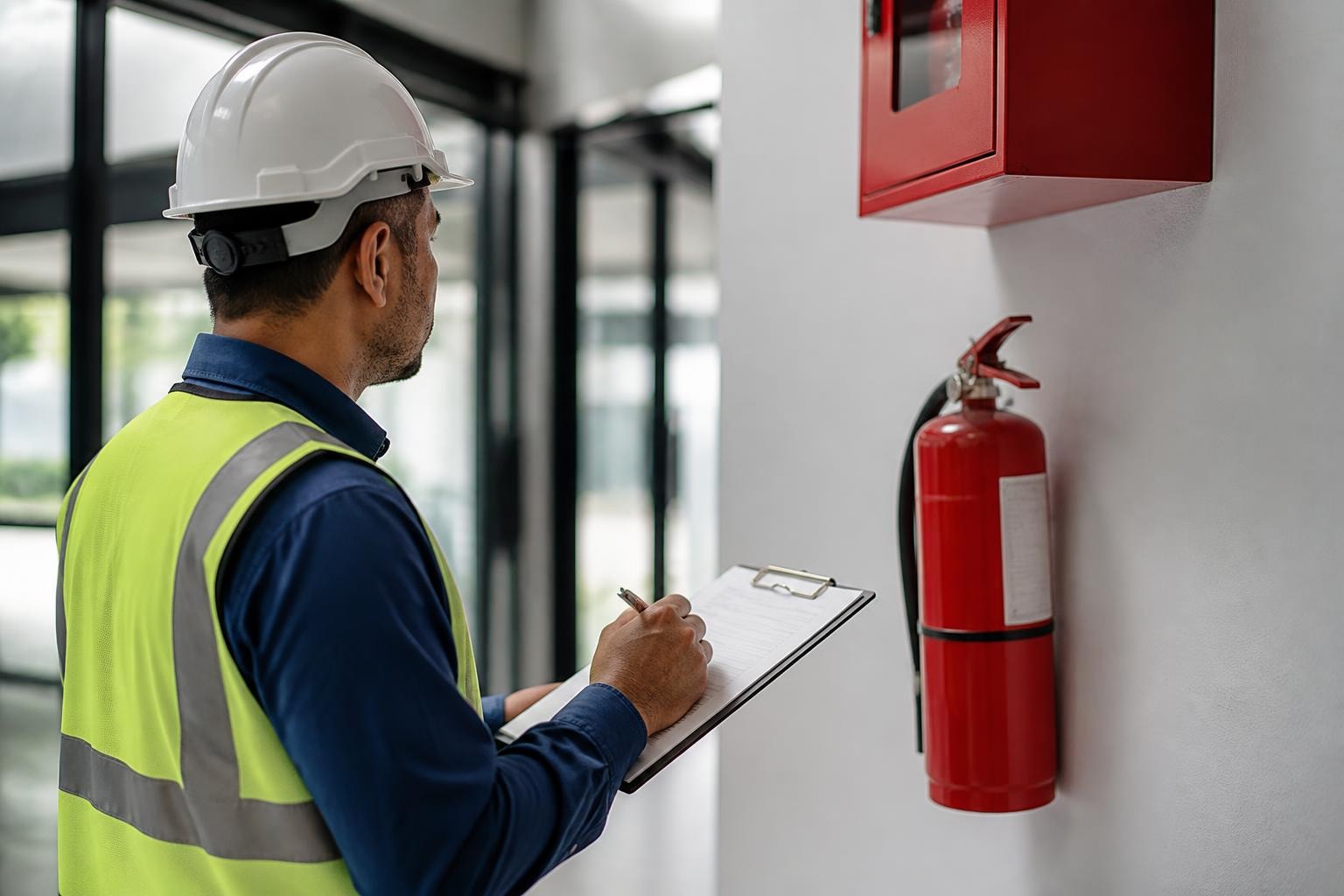
Fire and safety inspection represents one of the most critical compliance obligations for businesses across the United Kingdom. These inspections serve as the primary mechanism through which regulatory authorities verify that premises meet the stringent requirements set out in fire safety legislation. Whether conducted by local fire and rescue services, third-party assessors, or internal compliance teams, these evaluations identify potential hazards, assess risk mitigation measures, and ensure that life safety systems function as intended. For property owners, facility managers, and designated Responsible Persons, understanding the inspection process is essential to maintaining legal compliance, protecting occupants, and avoiding enforcement action.
Understanding the Fire and Safety Inspection Framework
The regulatory landscape governing fire and safety inspection in the United Kingdom centres on the Regulatory Reform (Fire Safety) Order 2005, which places clear duties on Responsible Persons to maintain safe premises. This legislation requires businesses to implement appropriate fire precautions, conduct regular risk assessments, and maintain fire safety equipment in proper working order.
Inspections can occur in various forms and frequencies. Routine inspections typically follow a scheduled programme based on occupancy type and risk level, whilst unannounced visits may take place following complaints, incidents, or as part of targeted enforcement campaigns.
Types of Fire and Safety Inspection
Different inspection types serve distinct purposes within the compliance framework:
- Regulatory inspections conducted by fire and rescue authorities under statutory powers
- Third-party assessments performed by qualified fire safety professionals
- Insurance surveys required by underwriters to validate risk profiles
- Internal audits undertaken by competent persons within organisations
- Pre-occupancy inspections for new builds or significant alterations
Each inspection type follows specific protocols, though all share common objectives: identifying deficiencies, evaluating risk levels, and verifying compliance with applicable standards.
The frequency of these inspections varies considerably depending on premises classification. High-risk occupancies such as hospitals, care homes, and large assembly venues may face annual or even more frequent inspections, whilst lower-risk commercial properties might be inspected every three to five years. Understanding fire inspection frequency helps businesses plan their compliance activities appropriately.
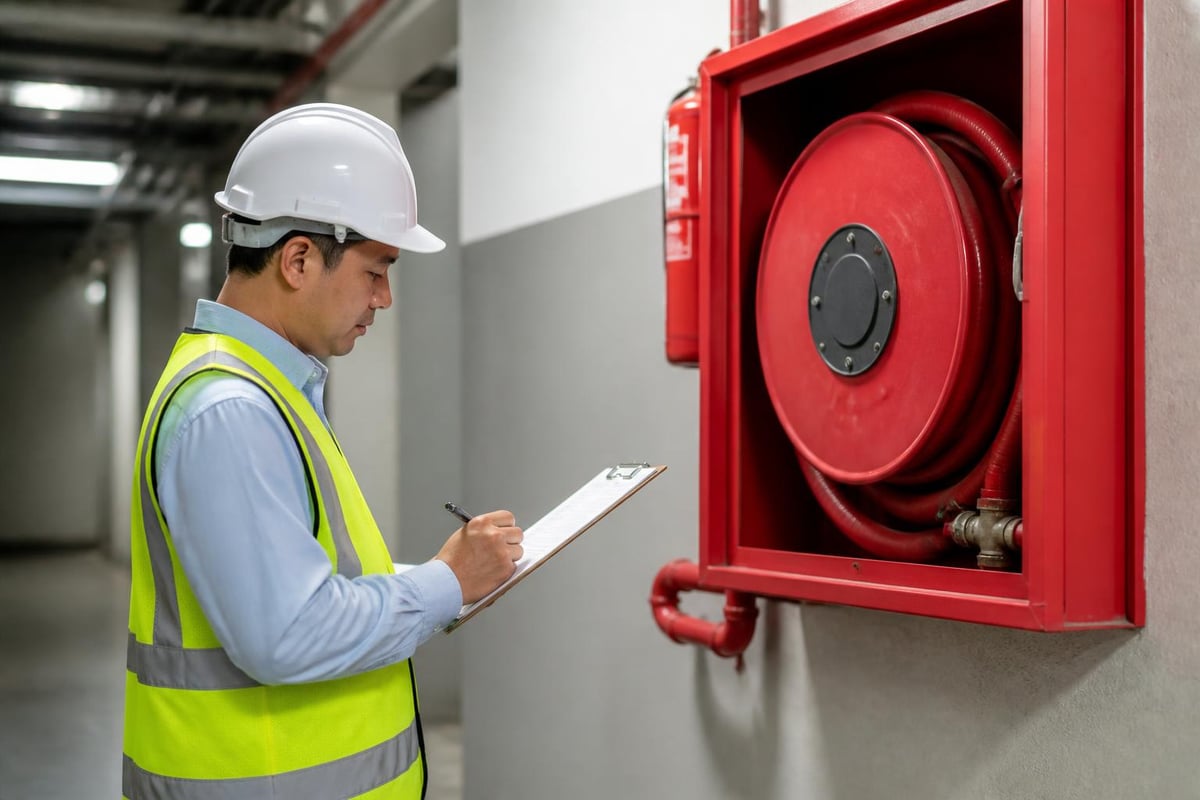
Key Areas Examined During Fire and Safety Inspection
Inspectors evaluate multiple interconnected systems and processes during a comprehensive fire and safety inspection. The scope extends far beyond simply checking extinguishers, encompassing the entire fire safety management framework.
Means of Escape and Emergency Routes
Escape route integrity forms the foundation of any fire safety strategy. Inspectors verify that:
- All escape routes remain unobstructed and clearly marked
- Emergency exit doors open in the direction of travel and function properly
- Signage meets British Standards and remains visible in all lighting conditions
- Travel distances comply with Approved Document B requirements
- Protected corridors maintain fire resistance ratings
Fire and life safety inspection protocols place particular emphasis on escape route availability, as compromised egress represents one of the most serious deficiencies inspectors encounter.
Passive Fire Protection Elements
Compartmentation and structural fire protection receive detailed scrutiny during inspections. Fire doors, in particular, demand close attention as they serve as the primary mechanism for containing fire and smoke spread.
| Component |
Inspection Focus |
Compliance Standard |
| Fire Doors |
Certification, integrity, self-closing devices, intumescent seals |
BS 476 / BS EN 1634 |
| Fire Stopping |
Penetration sealing, cavity barriers, service duct protection |
BS 476-20 / BS 8214 |
| Compartment Walls |
Fire resistance rating, structural integrity, penetration points |
Approved Document B |
| Protected Shafts |
Stairwell enclosures, lift shaft protection, ductwork fire dampers |
BS 9999 / BS 5588 |
Businesses requiring comprehensive fire door inspection services benefit from specialist assessment that identifies deficiencies before regulatory visits occur.
Active Fire Protection Systems
Fire detection and alarm systems undergo functional testing during inspections. Inspectors verify that systems operate correctly, provide adequate coverage, and receive appropriate maintenance.
Fire alarm inspection criteria include:
- System design - Zone configuration, detector placement, alarm audibility
- Testing records - Weekly call point tests, monthly system checks, annual servicing
- Power supply - Mains supply integrity, battery backup capacity, changeover functionality
- Signalling - Control panel operation, fault indication, remote monitoring connectivity
Regular fire alarm inspections ensure early detection capabilities remain reliable, providing occupants with critical early warning in fire situations.
Firefighting equipment, including portable extinguishers, hose reels, and blankets, must be properly maintained and accessible. Inspectors check commissioning dates, service records, and positioning to ensure equipment availability when needed.
Preparation Strategies for Successful Fire and Safety Inspection
Thorough preparation significantly improves inspection outcomes and demonstrates organisational commitment to fire safety compliance. Businesses that maintain ongoing readiness rather than scrambling before scheduled visits consistently achieve better results.
Documentation and Record Management
Inspectors require evidence that fire safety management operates systematically rather than reactively. Essential documentation includes:
- Current fire risk assessments with action plans
- Fire safety training records for all staff
- Evacuation drill logs with participation records
- Equipment maintenance certificates and service history
- Previous inspection reports with remedial action evidence
Maintaining these records in an organised, accessible format streamlines the inspection process and provides clear audit trails demonstrating compliance efforts.
Physical Premises Preparation
Conducting pre-inspection walkthroughs using detailed fire inspection checklists helps identify and rectify issues before official visits. This proactive approach addresses common deficiencies that might otherwise result in enforcement notices.
Pre-inspection checklist priorities:
- Clear all escape routes of obstructions and storage
- Test emergency lighting and replace failed lamps
- Verify fire door operation and repair defective closers
- Check extinguisher inspection tags and arrange servicing if due
- Ensure fire action notices display current information
- Remove combustible materials from electrical cupboards
- Verify sprinkler and suppression system gauges show correct pressures

Businesses operating across multiple sites should implement standardised preparation protocols to ensure consistent compliance levels. Professional fire risk assessment services provide expert evaluation that identifies vulnerabilities before regulatory inspections occur.
Common Deficiencies Identified During Fire and Safety Inspection
Understanding frequent compliance failures helps businesses prioritise corrective action and avoid repeated violations. Many deficiencies stem from inadequate maintenance rather than fundamental design problems.
Fire Door Failures
Fire door deficiencies represent one of the most prevalent issues encountered during fire and safety inspection activities. Common problems include:
- Missing or damaged intumescent seals and smoke seals
- Defective or absent self-closing devices
- Gaps exceeding tolerance levels around door edges
- Improper modifications including ventilation grilles
- Missing certification labels preventing verification
- Wedging or propping open without automatic release mechanisms
The consequences of fire door failures can be catastrophic, as demonstrated in numerous fire investigation reports. Maintaining comprehensive passive fire protection systems ensures these critical barriers perform as designed.
Inadequate Fire Risk Assessment
The fire risk assessment serves as the cornerstone of fire safety management, yet inspectors frequently identify serious shortcomings:
| Deficiency Type |
Impact |
Correction Required |
| Outdated assessments |
Fails to reflect current use or alterations |
Complete reassessment by competent person |
| Generic templates |
Doesn't address site-specific hazards |
Bespoke evaluation considering actual conditions |
| Incomplete action plans |
Leaves identified risks unaddressed |
Prioritised remediation schedule with timescales |
| No review schedule |
Assessment becomes progressively irrelevant |
Implement regular review cycle (minimum annually) |
The fire safety survey preparation process emphasises the importance of maintaining current, site-specific risk assessments that genuinely inform fire safety decisions.
Emergency Lighting and Signage Deficiencies
Emergency lighting systems must provide adequate illumination during power failures, yet inspection reports frequently cite:
- Failed lamps not identified through monthly testing
- Insufficient battery duration to support evacuation times
- Inadequate illumination levels on escape routes
- Missing or faded emergency exit signage
- Photoluminescent signs requiring charging not receiving adequate light exposure
These deficiencies compromise evacuation safety, particularly in large or complex buildings where unfamiliar visitors rely on signage and emergency lighting for safe egress.
Managing Fire and Safety Inspection Outcomes
Inspection results typically fall into several categories, each carrying different implications for businesses and requiring specific response actions.
Understanding Enforcement Actions
Fire authorities possess considerable enforcement powers when fire and safety inspection reveals serious deficiencies. The enforcement pyramid ranges from informal advice through to prosecution:
- Verbal advice - Minor issues requiring simple correction
- Informal notification - Written recommendations without statutory force
- Enforcement notice - Legal requirement to remedy specific deficiencies within stated timescales
- Alterations notice - Restricts future changes without fire authority consultation
- Prohibition notice - Immediate restriction or closure due to serious risk
- Prosecution - Criminal proceedings for serious breaches or persistent non-compliance
Fire and life safety inspection processes in regulated jurisdictions demonstrate how enforcement escalation operates when businesses fail to address identified risks promptly.
Developing Effective Remediation Plans
When fire and safety inspection identifies deficiencies, structured remediation planning ensures timely, effective correction. Successful remediation programmes incorporate:
Risk-based prioritisation - Address life-critical issues immediately, with lower-risk items scheduled systematically
Clear accountability - Assign specific individuals responsibility for each remedial action
Realistic timescales - Consider procurement lead times, contractor availability, and budget cycles
Progress monitoring - Regular reviews confirm completion and prevent items languishing indefinitely
Verification processes - Independent confirmation that corrections meet required standards
Businesses facing extensive remediation requirements should engage specialist fire safety consultants who can provide technical guidance and project management support throughout the correction process.

Leveraging Technology in Fire and Safety Inspection
Digital transformation increasingly influences how businesses manage fire safety compliance and prepare for inspections. Modern approaches offer significant advantages over traditional paper-based systems.
Digital Inspection Tools and Software
Purpose-built fire safety management platforms streamline compliance activities:
- Centralised documentation - Cloud-based repositories ensure records remain accessible and current
- Automated reminders - System-generated alerts for testing, servicing, and review deadlines
- Mobile inspection apps - Real-time deficiency logging with photographic evidence
- Audit trails - Complete history of compliance activities demonstrating due diligence
- Reporting dashboards - Visual compliance status across multiple sites or portfolios
Advanced inspection frameworks demonstrate how data analytics and machine learning can optimise inspection scheduling and resource allocation, particularly for organisations managing large property portfolios.
Building Information Modelling for Fire Safety
BIM technology enables sophisticated fire safety management by integrating:
- Precise location data for fire safety equipment
- Service history linked to specific assets
- Compartmentation details embedded in building models
- Change management tracking affecting fire safety provisions
- Predictive maintenance scheduling based on equipment lifecycles
This integrated approach ensures fire and safety inspection preparation draws on comprehensive, accurate premises information rather than fragmented records scattered across multiple systems.
The Role of Competent Persons in Fire Safety Management
Regulatory requirements mandate that businesses appoint competent persons to oversee fire safety management. Competence encompasses appropriate training, experience, knowledge, and personal qualities necessary to discharge fire safety responsibilities effectively.
Defining Competence Standards
Competent persons demonstrate:
Technical knowledge - Understanding of fire behaviour, building construction, and protection systems
Regulatory awareness - Current knowledge of applicable legislation and approved guidance
Risk assessment capability - Ability to identify hazards, evaluate risks, and determine appropriate controls
Communication skills - Capacity to engage stakeholders and convey fire safety requirements clearly
Where internal resources lack necessary competence, businesses must engage external specialists. Professional fire safety services provide qualified assessors who bring expert knowledge and objective evaluation to complex compliance challenges.
Ongoing Professional Development
Fire safety knowledge evolves continuously as building techniques advance, regulations update, and investigation findings reveal new insights. Competent persons must maintain currency through:
- Accredited training programmes and qualifications
- Professional institution membership and networking
- Reviewing fire investigation reports and lessons learned
- Following regulatory consultations and guidance updates
- Participating in industry forums and working groups
This commitment to continuous learning ensures fire safety management remains effective and inspection-ready.
Sector-Specific Fire and Safety Inspection Considerations
Different occupancy types face unique fire safety challenges that influence inspection focus and compliance requirements.
Healthcare and Care Settings
Hospitals, care homes, and medical facilities present particular complexities:
- Progressive horizontal evacuation strategies requiring robust compartmentation
- Assisted evacuation needs for patients with mobility limitations
- 24-hour occupancy demanding reliable detection and alarm systems
- Medical gas storage introducing additional hazard considerations
- Infection control requirements potentially conflicting with fire safety measures
Fire and safety inspection in these settings examines how fire precautions accommodate vulnerable occupants whilst maintaining operational functionality.
Educational Establishments
Schools, colleges, and universities face distinct challenges:
- Variable occupancy levels throughout academic calendar
- Young or vulnerable persons requiring additional protection
- Residential accommodation combining sleeping and educational uses
- Specialist facilities including laboratories, workshops, and sports halls
- Public access areas used by parents and community groups
Inspectors verify that fire safety provisions address the full range of activities and user groups these complex environments accommodate.
Industrial and Warehouse Premises
Manufacturing and storage facilities introduce specific hazards:
| Hazard Category |
Common Risks |
Inspection Focus |
| Process hazards |
Flammable substances, hot work, dust explosions |
Ignition source control, extraction systems |
| Storage configurations |
High-racking, combustible materials, blocked routes |
Compartmentation, sprinkler coverage, access |
| Structural features |
Large open areas, limited escape routes |
Travel distances, alarm audibility, signage |
| Shift patterns |
Out-of-hours working, reduced supervision |
Emergency planning, training coverage |
Understanding these sector-specific considerations helps businesses prepare comprehensively for fire and safety inspection activities tailored to their particular circumstances.
Continuous Improvement Beyond Minimum Compliance
Progressive organisations recognise that fire safety represents an ongoing management process rather than a simple compliance exercise. Moving beyond minimum standards delivers tangible benefits:
Enhanced occupant safety - Proactive hazard management reduces incident likelihood and severity
Reduced business disruption - Effective fire prevention minimises operational interruption and recovery costs
Insurance advantages - Demonstrated commitment to fire safety may secure favourable premium rates
Regulatory relationships - Consistently high standards build confidence with enforcement authorities
Reputation protection - Fire incidents and enforcement action create significant reputational damage
Embedding fire safety within organisational culture, supported by senior leadership commitment and adequate resource allocation, transforms compliance from a burden into a strategic advantage.
Benchmarking and Best Practice
Organisations seeking continuous improvement benefit from:
- Comparing performance against industry standards and peer organisations
- Participating in sector-specific fire safety forums
- Implementing recommendations from fire investigation reports
- Adopting emerging technologies and methodologies
- Conducting regular management reviews of fire safety performance
Annual fire inspection best practices provide frameworks for systematic evaluation and progressive enhancement of fire safety provisions.
Multi-Site Fire Safety Management
Organisations operating across multiple locations face additional complexity in maintaining consistent fire safety standards and preparing for fire and safety inspection activities.
Standardisation Strategies
Effective multi-site management requires:
Consistent policies - Organisation-wide fire safety standards establishing baseline requirements
Standardised procedures - Uniform approaches to risk assessment, testing, and maintenance
Central oversight - Corporate fire safety function providing guidance and quality assurance
Local accountability - Site-level responsibility for implementation within established frameworks
Regular auditing - Internal inspection programmes verifying consistent standards across portfolio
Shared resources - Centralised procurement of services, equipment, and training
This balanced approach combines corporate governance with local operational responsibility, ensuring all sites maintain appropriate standards whilst benefiting from economies of scale.
Managing Diverse Property Types
Portfolio diversity presents particular challenges:
- Heritage buildings with conservation constraints limiting fire safety interventions
- Modern premises incorporating advanced fire engineering solutions
- Leasehold properties where responsibility divisions affect fire safety management
- Temporary or seasonal facilities requiring adaptable fire precautions
Fire and safety inspection preparation must accommodate these variations whilst maintaining overall compliance assurance across the entire estate.
Fire and safety inspection serves as the critical verification mechanism ensuring businesses maintain safe environments for occupants, visitors, and emergency responders. Understanding inspection processes, maintaining comprehensive documentation, and addressing deficiencies promptly demonstrates the commitment to life safety that regulations demand. Whether preparing for routine regulatory visits or implementing continuous improvement programmes, professional expertise ensures compliance obligations are met whilst protecting what matters most. Firesurv Group Ltd delivers comprehensive fire safety assessment, installation, and training services that keep businesses across the United Kingdom safe, compliant, and confident in their fire protection provisions.