Fire doors represent one of the most critical yet frequently overlooked elements of passive fire protection in commercial and residential buildings across the United Kingdom. These specialised assemblies are engineered to contain fire and smoke within designated compartments, providing occupants with vital time to evacuate and emergency services with safer access. Despite their importance, many fire doors fail to perform when needed most, often due to inadequate maintenance, improper installation, or lack of systematic inspection. Understanding the requirements and methodologies surrounding fire door inspection is essential for any organisation seeking to maintain compliance with UK fire safety legislation and, more importantly, protect lives.
Understanding Fire Door Assemblies and Their Function
Fire doors differ fundamentally from standard doors in both construction and purpose. Each assembly comprises multiple components working together to achieve a specified fire resistance rating, typically expressed in minutes such as FD30 or FD60.
The door leaf itself contains fire-resistant core materials, whilst intumescent seals expand when exposed to heat, sealing gaps that would otherwise allow smoke penetration. Hinges must be capable of supporting the door's weight under fire conditions, and latches must keep the door firmly closed.
Key components requiring inspection include:
- Door leaf and frame construction
- Intumescent and smoke seals
- Self-closing devices
- Hinges and hanging mechanisms
- Latching and locking hardware
- Glazing and vision panels
- Signage and certification labels
Any compromise to these elements can render the entire assembly ineffective. A fire door with damaged seals, an obstructed closing mechanism, or excessive gaps will fail to contain fire and smoke as designed, regardless of how well the door leaf itself is constructed.
Legal Framework Governing Fire Door Inspection
The Regulatory Reform (Fire Safety) Order 2005 places clear duties upon the Responsible Person to ensure fire safety measures, including fire doors, are properly maintained and inspected regularly. This legislation applies to virtually all non-domestic premises in England and Wales, with similar regulations covering Scotland and Northern Ireland.
Under this framework, fire doors must be maintained in effective working order through regular checks and formal inspections. The Responsible Person must conduct suitable and sufficient fire risk assessments, identifying all fire doors and establishing appropriate inspection regimes based on usage, building type, and occupancy risk.

Building Regulations Approved Document B provides technical guidance on fire safety provisions, whilst British Standards such as BS 9999 and BS 8214 offer detailed methodologies for inspection and maintenance. Third-party certification schemes provide additional assurance that fire doors meet required performance standards.
Failure to maintain compliant fire door inspection regimes can result in enforcement notices, prohibition orders, or prosecution. Beyond legal consequences, inadequate fire door maintenance exposes organisations to significant civil liability should injury or death occur during a fire incident.
Inspection Frequency and Scheduling Requirements
Determining appropriate fire door inspection intervals requires consideration of multiple factors including building use, occupancy levels, and door location. High-traffic areas demand more frequent attention than rarely used compartmentation doors in plant rooms or storage areas.
Recommended Inspection Intervals
| Door Location |
Visual Check |
Detailed Inspection |
| High-traffic commercial |
Weekly |
Six months |
| Standard office/retail |
Monthly |
Annually |
| Residential common areas |
Monthly |
Annually |
| Low-use/service areas |
Quarterly |
Annually |
Weekly visual checks should be incorporated into routine building management activities, focusing on obvious defects such as wedged-open doors, damaged closers, or visible frame damage. These quick assessments take minutes per door but identify immediate risks requiring attention.
Comprehensive fire door inspection should occur at least annually, with detailed examination of all components against established standards. Many organisations align these inspections with annual fire risk assessment reviews, creating an integrated compliance programme.
Manufacturing facilities, healthcare premises, and buildings housing vulnerable persons may require more frequent inspection due to elevated risk profiles. Fire risk assessments help determine appropriate inspection frequencies based on specific premises characteristics.
Conducting Systematic Fire Door Inspections
Professional fire door inspection follows structured methodologies ensuring consistent evaluation against recognised standards. Inspectors should possess appropriate training and competence, understanding both regulatory requirements and practical performance criteria.
The inspection process begins with door identification, recording location, certification details, and fire resistance rating. Each component then undergoes systematic evaluation, with findings documented against pass/fail criteria or risk-based classification systems.
Essential inspection elements include:
- Door leaf condition – checking for warping, damage, or degradation
- Frame integrity – assessing fixings, alignment, and structural soundness
- Gap measurement – verifying compliance with maximum tolerances
- Seal condition – examining intumescent and smoke seals for damage or absence
- Hardware functionality – testing closers, hinges, latches, and locks
- Signage verification – confirming appropriate labels and instructions
Gap measurements require particular attention, as excessive clearances between door and frame compromise fire resistance. The Illinois State Fire Marshal's inspection checklist provides practical guidance on acceptable tolerances and measurement techniques applicable to UK contexts.
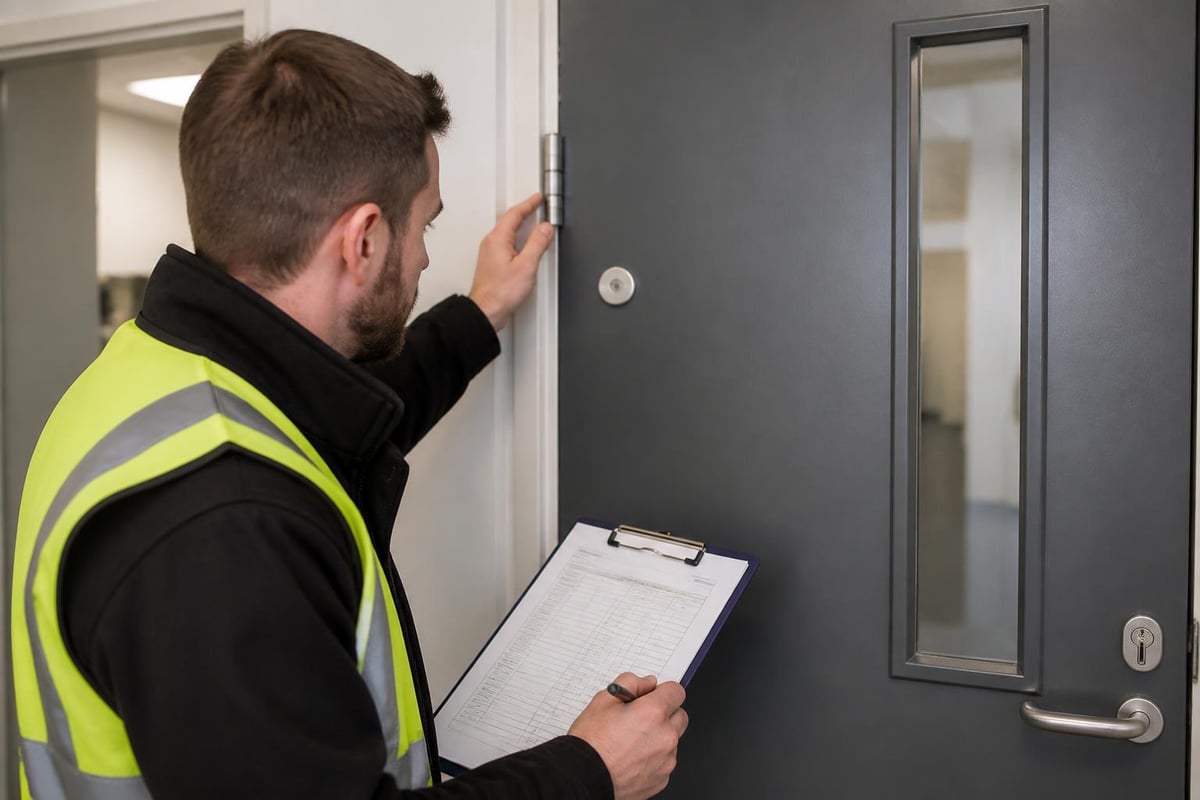
Doors must close fully from any open position, with latches engaging properly without manual assistance. Self-closing devices should provide controlled, consistent closing action without slamming or failing to secure the latch. Testing these functions under normal operating conditions reveals issues that static observation might miss.
Common Defects and Compliance Failures
Years of conducting fire door inspections across UK premises reveal recurring issues that compromise fire safety. Understanding these common failures helps organisations implement preventive maintenance strategies and focus inspection attention appropriately.
Prevalent defects include:
- Doors wedged or propped open, defeating their purpose entirely
- Missing or damaged intumescent seals allowing smoke passage
- Faulty or disconnected self-closing devices
- Excessive gaps exceeding 4mm tolerance in critical areas
- Inappropriate modifications such as additional locks or letter boxes
- Damaged or missing certification labels preventing verification
- Incorrect or missing signage failing to identify fire doors
Many defects result from well-intentioned but uninformed modifications. Staff members prop doors open for convenience, maintenance personnel fit non-compliant hardware, or cleaning equipment damages seals and door edges. Creating awareness amongst building users prevents many common issues.
Some failures stem from inadequate initial specification or installation. Doors lacking proper certification, incorrect frame types, or inappropriate hardware selections cannot achieve required fire resistance regardless of maintenance quality. These systemic issues often emerge only during professional inspection, highlighting the value of expert assessment.
Defect Classification and Prioritisation
| Risk Category |
Description |
Action Timeframe |
| Critical |
Door cannot contain fire/smoke |
Immediate action |
| High |
Significant performance compromise |
Within 7 days |
| Medium |
Moderate defect affecting compliance |
Within 30 days |
| Low |
Minor issue requiring attention |
Next maintenance cycle |
Professional inspectors categorise defects by severity, enabling organisations to prioritise remedial works appropriately. Critical failures such as missing seals or non-functioning closers require immediate rectification, whilst cosmetic damage to door faces may be scheduled for routine maintenance.
Documentation and Record-Keeping Requirements
Comprehensive documentation forms an essential component of compliant fire door inspection programmes. Records demonstrate due diligence, guide maintenance planning, and provide evidence of systematic management should enforcement authorities or insurers require verification.
Inspection reports should capture sufficient detail to enable third parties to understand findings without requiring premises access. This includes clear door identification using location references, photographs of significant defects, and precise descriptions of required remedial works.
Essential documentation elements:
- Door location and identification reference
- Fire resistance rating and certification details
- Inspection date and inspector credentials
- Component-by-component assessment findings
- Defect categorisation and risk classification
- Remedial action recommendations with timescales
- Follow-up verification of completed works
Digital systems increasingly replace paper-based records, offering advantages in searchability, trend analysis, and integration with building management platforms. Photographic evidence proves particularly valuable, capturing defect conditions and providing visual references for contractors undertaking repairs.
Retention periods for fire safety documentation typically align with building lifecycles, though practical considerations suggest maintaining records for at least six years. These records support compliance demonstration, inform future risk assessments, and establish maintenance histories for individual doors.
Specialist Assessment and Certification Requirements
Whilst building management teams can conduct routine visual checks, comprehensive fire door inspection typically requires specialist knowledge and competence. The complexity of modern fire door assemblies, combined with evolving standards and certification schemes, makes professional assessment increasingly necessary.
Third-party certification schemes such as those operated by BM TRADA, Exova Warringtonfire, and Certifire provide assurance that doors meet specified performance criteria when manufactured and installed. However, these certifications relate to initial compliance rather than ongoing performance, making regular inspection essential.
Inspectors should demonstrate competence through recognised training programmes such as those offered by the Door and Hardware Federation or the Guild of Architectural Ironmongers. Understanding material behaviour under fire conditions, certification requirements, and regulatory frameworks enables informed assessment beyond simple checklist completion.
Passive fire protection specialists bring expertise in compartmentation strategy, helping organisations understand how fire doors integrate within broader fire safety measures including cavity barriers, fire stopping, and structural protection.
Complex premises such as hospitals, care homes, and high-rise residential buildings benefit particularly from specialist assessment. These environments present unique challenges including heavy usage patterns, vulnerable occupants, and extended evacuation timeframes demanding robust fire door performance.
Integration with Broader Fire Safety Management
Fire door inspection should not operate in isolation but rather form part of comprehensive fire safety management systems. This integration ensures consistent standards, efficient resource deployment, and coordinated responses to identified deficiencies.
Regular inspection findings inform fire risk assessment updates, highlighting changes in building use, occupancy patterns, or maintenance standards affecting overall risk profiles. Conversely, risk assessments identify fire doors requiring particular attention due to their location in escape routes or protecting high-hazard areas.
Effective integration involves:
- Aligning inspection schedules with broader compliance calendars
- Coordinating findings with maintenance management systems
- Incorporating fire door status into emergency planning
- Training staff on fire door importance and proper use
- Establishing clear responsibility chains for defect rectification
Building management software increasingly incorporates fire safety compliance modules, enabling centralised tracking of inspection due dates, defect statuses, and remedial work completion. These systems generate automated alerts preventing inspection lapses and provide management dashboards showing compliance status across portfolios.

Many organisations discover during fire door inspection that doors have been inappropriately modified or that non-compliant replacements have been fitted during building alterations. Establishing approval processes for any works affecting fire doors prevents these issues, ensuring specifications and installations maintain required standards.
Remedial Works and Performance Restoration
Identifying defects through fire door inspection represents only the first step; effective remediation ensures doors perform as intended when fire occurs. The scope and complexity of remedial works vary considerably depending on defect nature and door condition.
Minor issues such as adjusting closers, replacing damaged seals, or easing sticking doors often require minimal time and cost. Building maintenance teams with appropriate training can address many common defects, though quality assurance processes should verify work completion to required standards.
More significant problems including frame damage, door warping, or missing certification may necessitate complete door replacement. In these situations, professional fire door installation ensures new assemblies meet current standards and integrate properly with surrounding construction, providing verified fire resistance performance.
Common Remedial Actions
| Defect Type |
Typical Solution |
Complexity Level |
| Faulty closer |
Adjustment or replacement |
Low |
| Damaged seals |
Strip and refit intumescent seals |
Low |
| Excessive gaps |
Door easing or frame adjustment |
Medium |
| Warped door |
Door replacement |
High |
| Frame damage |
Frame repair or replacement |
High |
Organisations should establish clear procurement standards for fire door components, ensuring replacement hardware meets required specifications. Using non-certified hinges, closers, or seals compromises assembly performance, potentially invalidating the door's fire resistance rating.
Verification following remedial works confirms defects have been properly addressed. This may involve re-inspection by the original assessor or integration into subsequent inspection cycles. Documentation should link initial defect identification through remediation to final verification, creating complete audit trails.
Training and Competence Development
Effective fire door inspection programmes depend upon competent personnel understanding both technical requirements and practical assessment methodologies. Investment in training yields significant returns through improved inspection quality, reduced defect rates, and enhanced compliance confidence.
Building managers and facilities personnel benefit from awareness training covering fire door functions, common defects, and basic maintenance requirements. This knowledge enables meaningful participation in visual checks and informed decision-making regarding remedial works.
Professional inspectors require more comprehensive training addressing:
- Fire door construction and component functions
- Regulatory frameworks and guidance documents
- Inspection methodologies and documentation standards
- Defect identification and risk assessment
- Certification schemes and performance testing
The National Fire Protection Association's NFPA 80 standard provides internationally recognised guidance on fire door installation and maintenance, offering valuable reference material for training programmes. Whilst developed for North American contexts, its principles translate effectively to UK applications.
Ongoing competence maintenance requires engagement with evolving standards, emerging technologies, and lessons learned from fire incidents. Professional membership organisations facilitate this through technical bulletins, networking events, and continuing professional development programmes.
Emerging Technologies and Future Developments
Fire door inspection practices continue evolving through technological innovation and regulatory development. Understanding emerging trends helps organisations prepare for changing requirements and opportunities for enhanced compliance management.
Digital inspection tools increasingly replace paper checklists, offering advantages in data capture, quality assurance, and reporting efficiency. Mobile applications enable on-site recording of findings with photographic evidence, automatic report generation, and direct integration with maintenance management systems.
Sensor technologies now enable continuous monitoring of fire door status, providing real-time alerts when doors are wedged open or closers fail. These systems complement rather than replace physical inspection, offering additional assurance between formal assessment cycles.
Building Information Modelling (BIM) integration creates opportunities for more sophisticated fire door management, linking physical assets with digital records containing certification details, maintenance histories, and inspection schedules. As BIM adoption increases across UK construction, these capabilities will become increasingly accessible.
The International Building Code continues developing fire door requirements, with UK standards typically evolving in parallel. Staying informed about regulatory changes ensures inspection programmes maintain relevance and organisations avoid compliance gaps.
Cost Considerations and Business Case Development
Fire door inspection represents an investment in safety and compliance, yet organisations understandably consider cost implications when establishing programmes. Understanding the financial aspects helps develop sustainable approaches balancing regulatory compliance with operational efficiency.
Inspection costs vary based on building size, door quantities, and assessment complexity. A typical commercial premises might invest £30-£50 per door for comprehensive annual inspection, though economies of scale reduce unit costs for larger portfolios.
However, comparing this investment against potential consequences of non-compliance provides compelling justification. Enforcement action costs, business interruption from prohibition notices, insurance implications, and reputational damage following fire incidents far exceed inspection programme investments.
Financial benefits include:
- Reduced insurance premiums through demonstrated compliance
- Extended door lifespan through preventive maintenance
- Avoided costs of emergency repairs or replacements
- Protection against enforcement penalties
- Enhanced asset value through documented maintenance
Many organisations discover that systematic inspection programmes actually reduce overall costs through early defect detection, planned remediation scheduling, and bulk procurement of replacement components. Reactive approaches addressing only critical failures typically prove more expensive long-term.
Integrating fire door inspection within broader passive fire protection strategies maximises efficiency, as inspectors assess multiple compartmentation elements during single site visits. This coordinated approach reduces disruption whilst ensuring comprehensive fire safety coverage.
Sector-Specific Considerations and Applications
Different building types present unique fire door inspection challenges requiring tailored approaches. Understanding sector-specific requirements ensures inspection programmes address relevant risks appropriately.
Healthcare facilities demand particular attention due to vulnerable occupants and complex operational requirements. Fire doors must balance security, infection control, and emergency access whilst maintaining fire resistance. Specialist hardware such as electromagnetic hold-open devices requires additional inspection focus.
Educational premises face challenges from high occupant densities and varying supervision levels. Fire doors protecting escape routes require robust construction to withstand heavy use, whilst inspection programmes must accommodate term-time scheduling constraints.
Residential buildings, particularly high-rise developments, have attracted intense regulatory scrutiny following recent tragic incidents. Flat entrance doors form critical elements of compartmentation strategies, requiring verification of fire resistance ratings and proper installation standards.
Industrial and warehouse facilities often feature large fire doors protecting high-value assets or separating processes with different fire risks. These assemblies may incorporate unusual configurations requiring specialist assessment beyond standard residential or commercial inspection protocols.
Heritage buildings present unique challenges balancing fire safety with conservation requirements. Fire door solutions must integrate sensitively with historic fabric, sometimes requiring bespoke designs and specialist assessment methodologies.
Fire door inspection stands as a cornerstone of effective fire safety management, protecting lives whilst ensuring regulatory compliance across UK premises. Systematic assessment identifies defects before they compromise performance, maintains compartmentation integrity, and demonstrates the due diligence expected of Responsible Persons under current legislation. Whether you require comprehensive fire door surveys, remedial installations, or ongoing compliance support, Firesurv Group Ltd delivers expert fire safety services backed by deep technical knowledge and commitment to keeping businesses safe and legally compliant throughout the United Kingdom.