Fire safety remains one of the most critical responsibilities for any organisation operating in the United Kingdom. With evolving regulations, advancing technology, and increasing scrutiny from enforcement authorities, businesses must adopt comprehensive fire solutions that protect life, preserve assets, and maintain legal compliance. Understanding the full spectrum of available fire solutions enables responsible persons to make informed decisions about their premises, ensuring that protective measures are proportionate, effective, and aligned with current best practice.
Understanding the Fire Solutions Landscape
The term "fire solutions" encompasses a broad range of protective measures, from the passive elements built into a structure's fabric to the active systems that detect and suppress fires. Modern fire safety strategy recognises that no single measure provides complete protection; instead, layered defences create resilient systems that function together during an emergency.
Passive fire protection forms the foundation of any fire safety strategy. These solutions include fire-resistant walls, floors, and ceilings that compartmentalise buildings, restricting fire and smoke spread. Fire doors, cavity barriers, and fire-stopping materials maintain the integrity of these compartments, preserving escape routes and allowing firefighters time to intervene.
Active fire solutions complement passive measures through detection and suppression. Fire alarm systems provide early warning, whilst sprinklers and other suppression systems can control or extinguish fires before they become catastrophic. The National Fire Protection Association (NFPA) publishes extensive guidance on both passive and active fire protection standards used globally.
Regulatory Framework Driving Fire Solutions
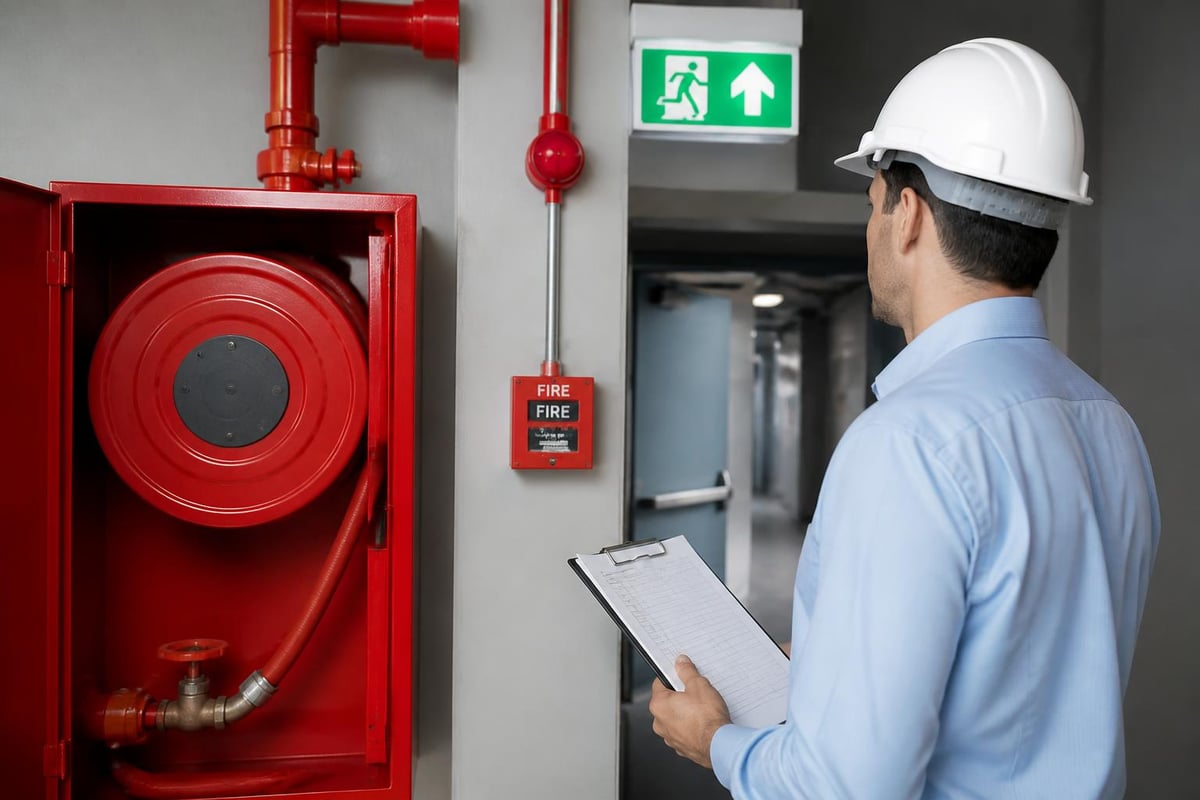
The Regulatory Reform (Fire Safety) Order 2005 establishes the legal framework requiring responsible persons to implement appropriate fire solutions. This risk-based legislation mandates that organisations assess their fire risks, implement proportionate measures, and maintain robust management systems. Compliance extends beyond initial installation to encompass ongoing maintenance, testing, and periodic review.
Recent legislative developments, including the Fire Safety Act 2021 and Building Safety Act 2022, have expanded responsibilities particularly for multi-occupied residential buildings. These changes emphasise the critical importance of maintaining compartmentation integrity and ensuring that fire solutions remain effective throughout a building's lifecycle.
Passive Fire Protection Solutions
Passive fire solutions provide the structural backbone of building fire safety. Unlike active systems requiring detection or activation, passive measures work continuously through their inherent fire-resistant properties. Their effectiveness depends entirely on correct specification, installation, and ongoing maintenance.
Fire Doors and Compartmentation
Fire doors represent the most visible passive fire solution in most buildings. These specialist doors must resist fire and smoke for their rated period, typically 30 or 60 minutes, preventing fire spread between compartments. Effective fire door performance depends on multiple components working together:
- Door leaves and frames manufactured to tested specifications
- Intumescent seals that expand under heat to seal gaps
- Self-closing devices ensuring doors remain closed when not in use
- Appropriate ironmongery that doesn't compromise fire resistance
- Proper installation maintaining specified tolerances and clearances
Regular fire door inspection identifies degradation, damage, or inappropriate modifications that compromise performance. Many organisations underestimate how quickly fire doors deteriorate through daily use, particularly in high-traffic areas where hardware loosens and seals become damaged.
Structural Fire Protection
Structural elements require protection to maintain load-bearing capacity during fires. Steel frames need coating with intumescent paint or encasement in fire-resistant boards. Timber structures may require chemical treatment or protective cladding. These fire solutions ensure buildings don't collapse whilst occupants evacuate and firefighters operate within.
Penetrations through fire-resistant elements create vulnerabilities that demand careful attention. Cables, pipes, ducts, and service risers must be sealed with tested fire-stopping systems that restore compartmentation integrity. The Fire Safety Research Institute (FSRI) conducts ongoing research into fire dynamics that informs the development of more effective passive protection solutions.
| Passive Fire Solution |
Primary Function |
Typical Rating |
Maintenance Frequency |
| Fire Doors |
Compartmentation |
30-120 minutes |
6-12 months |
| Cavity Barriers |
Prevent concealed spread |
30-60 minutes |
Annual inspection |
| Fire Stopping |
Seal penetrations |
Match compartment |
Post-works verification |
| Structural Protection |
Maintain integrity |
30-240 minutes |
Condition monitoring |
Active Fire Detection and Alarm Systems
Active fire solutions provide early warning and, in some cases, automatic suppression. Fire alarm systems detect fires through smoke, heat, or flame sensors, triggering audible and visual alarms that prompt evacuation. System design must account for building layout, occupancy type, risk profile, and evacuation strategy.
Fire Alarm Categories and Applications
Fire alarm systems fall into categories that reflect their sophistication and application suitability. Manual systems rely on break-glass call points and provide basic protection for low-risk premises. Automatic systems incorporate detectors throughout the building, offering earlier detection and greater protection.
L-category systems protect life through various coverage levels. L1 systems provide detection throughout all areas, suitable for high-risk or complex buildings. L2 systems protect defined escape routes and high-risk areas. L3 systems cover escape routes only, whilst L4 and L5 systems provide more limited protection tailored to specific needs.
P-category systems prioritise property protection, detecting fires earlier to enable intervention before significant damage occurs. Many premises require hybrid systems combining life and property protection objectives.
Professional fire alarm installation ensures systems comply with BS 5839-1 standards, the benchmark for fire detection and alarm systems in non-domestic premises. Installation quality directly impacts reliability, with poor workmanship causing false alarms that erode occupant confidence and create complacency.
Maintaining Detection System Reliability
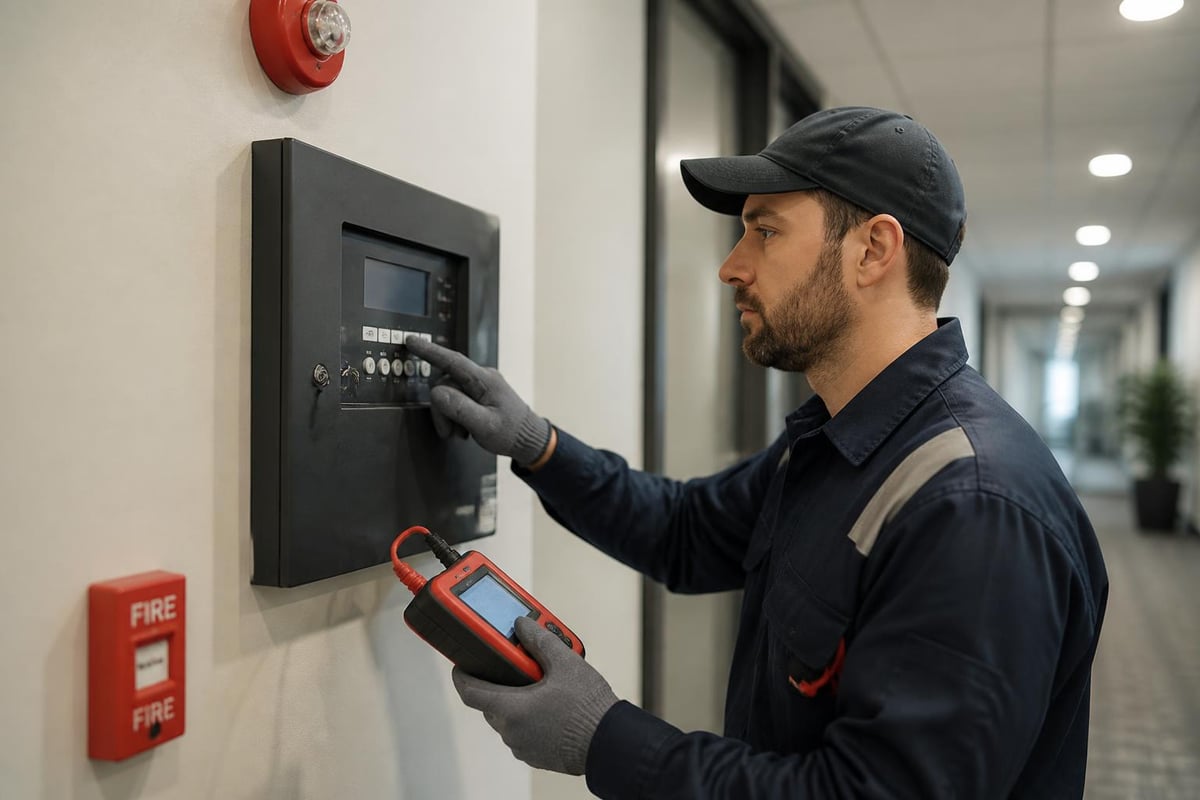
Fire alarm systems demand regular testing and maintenance to ensure operational reliability. Weekly tests verify basic functionality, quarterly inspections check detector operation, and annual servicing by competent technicians maintains compliance. OSHA's fire safety guidelines emphasise the importance of maintaining all fire protection equipment in serviceable condition.
Modern addressable systems provide detailed diagnostic information, identifying specific detector faults and system issues. This sophistication enables predictive maintenance, addressing problems before they cause system failures. However, it also requires technically competent personnel who understand system operation and can interpret diagnostic data correctly.
Suppression Systems as Fire Solutions
Automatic suppression systems represent advanced fire solutions that can control or extinguish fires without human intervention. Whilst representing significant investment, suppression systems dramatically reduce fire damage and business interruption in appropriate applications.
Sprinkler System Applications
Sprinkler systems remain the most proven automatic suppression solution. When fire heats a sprinkler head to its activation temperature, water discharges directly over the fire, controlling or extinguishing it whilst raising the alarm. Statistics consistently demonstrate that sprinkler systems operate successfully in over 90% of fires, with most fires controlled by four or fewer heads.
Different sprinkler system configurations suit various applications:
- Wet pipe systems keep water in pipes ready for immediate discharge
- Dry pipe systems use compressed air or nitrogen in cold environments
- Pre-action systems require two triggers before water discharge
- Deluge systems discharge from all heads simultaneously for high-hazard areas
Specialist Suppression Solutions
Some environments require alternatives to water-based suppression. Gas suppression systems using inert gases or chemical agents protect data centres, archives, and electrical installations. Foam systems control flammable liquid fires in industrial applications. Kitchen suppression systems address cooking oil fires with specialist wet chemical agents.
Research into advanced fire detection continues, with developments like FireNet neural networks demonstrating how machine learning can enhance fire detection accuracy and reduce false alarms. These technological advances promise more sophisticated fire solutions that integrate detection, suppression, and building management systems.
Portable Firefighting Equipment
Portable fire extinguishers provide first-response capability, enabling occupants to tackle small fires before they escalate. Selecting appropriate fire solutions for portable equipment requires understanding fire classifications and extinguisher types. Water extinguishers suit Class A (solid combustibles), CO2 extinguishers address Class B (flammable liquids) and electrical fires, whilst powder extinguishers offer multi-class capability with greater mess and cleanup requirements.
Strategic positioning ensures extinguishers remain accessible without excessive travel distances. Mounting heights, signage visibility, and obstruction-free access all influence effectiveness during emergencies when stress affects decision-making. Comprehensive firefighting equipment provision considers both regulatory compliance and practical usability.
Annual servicing by competent technicians maintains extinguisher reliability. Visual inspections between services identify damage, discharge, or tampering requiring immediate attention. Many organisations overlook this simple fire solution, discovering missing or discharged extinguishers only during audits or, worse, during actual fires.
Emergency Planning and Procedural Fire Solutions
Technical fire solutions only succeed when complemented by robust emergency planning. Personal Emergency Evacuation Plans (PEEPs) ensure that persons requiring assistance can evacuate safely. Fire action notices provide clear instructions visible throughout premises. Assembly points designated at safe distances prevent crowding near exits.
Regular fire drills test theoretical plans against practical reality, identifying weaknesses in evacuation procedures, communication systems, or staff familiarity with escape routes. Research examining visibility in performance-based fire safety design demonstrates how smoke affects wayfinding, emphasising the importance of well-rehearsed evacuation procedures that don't rely solely on visual cues.
Training as a Fire Solution
Staff training transforms passive knowledge into active competency. Fire safety awareness training ensures all employees understand their responsibilities, recognise fire hazards, and respond appropriately during emergencies. Fire warden training develops designated personnel capable of coordinating evacuations, conducting sweeps, and liaising with emergency services.
Practical training using fire extinguishers builds confidence and competence, though organisations must balance training benefits against the risk of encouraging unqualified firefighting attempts. Professional fire safety training addresses these concerns through scenario-based learning that emphasises risk assessment and appropriate responses.

Integrated Fire Solutions Strategies
Effective fire safety emerges from integrated strategies where multiple fire solutions support one another. A typical commercial building might combine fire-resistant construction, compartmentation maintained by fire doors, automatic detection triggering alarms and suppression, emergency lighting illuminating escape routes, and trained personnel executing practised evacuation procedures.
| Fire Solution Type |
Detection |
Containment |
Suppression |
Evacuation |
| Passive Protection |
- |
✓✓✓ |
- |
✓✓ |
| Fire Alarms |
✓✓✓ |
- |
- |
✓✓✓ |
| Sprinkler Systems |
✓ |
✓✓ |
✓✓✓ |
✓✓ |
| Emergency Lighting |
- |
- |
- |
✓✓✓ |
| Fire Extinguishers |
- |
✓ |
✓✓ |
✓ |
This layered approach recognises that no single fire solution provides complete protection. Should one measure fail, others maintain protective capability, reducing the likelihood of catastrophic outcomes. The National Institute of Standards and Technology (NIST) FIREDOC database contains extensive research supporting these multi-layered fire safety strategies.
Risk Assessment Driving Fire Solutions Selection
Appropriate fire solutions emerge from thorough risk assessment processes. The five-step methodology mandated by the Regulatory Reform (Fire Safety) Order 2005 identifies hazards, evaluates who might be harmed, assesses existing measures, implements improvements, and reviews regularly. This systematic approach ensures fire solutions address actual risks rather than perceived threats.
Qualified assessors bring technical knowledge and practical experience to evaluations, recognising subtle indicators that untrained observers miss. Comprehensive fire risk assessment considers ignition sources, fuel loads, building construction, occupancy characteristics, and evacuation challenges. Assessment outputs prioritise actions, enabling organisations to address the most significant risks first within available budgets.
Emerging Technologies in Fire Solutions
Innovation continues advancing fire solutions capabilities. Aspirating smoke detection systems sample air continuously, detecting combustion products at extremely low concentrations. Video smoke detection uses analytics to identify smoke patterns in large open spaces where conventional detectors prove impractical. Wireless detection systems overcome installation challenges in heritage buildings or complex retrofits.
Data analytics enable predictive approaches to fire risk management. The Firebird framework demonstrates how machine learning can prioritise fire inspections based on risk factors, optimising resource allocation. Comprehensive data-driven fire risk analysis integrates building characteristics, occupancy patterns, and historical incident data to identify elevated risk scenarios.
Smart building integration creates opportunities for coordinated responses where fire detection triggers suppression activation, HVAC shutdown preventing smoke spread, access control releasing secured doors, and lift recall preventing entrapment. These sophisticated fire solutions require careful design, commissioning, and maintenance to ensure reliability when needed most.
Maintenance and Testing Regimes
Even the most sophisticated fire solutions fail without proper maintenance. Regulatory compliance demands that organisations establish and follow documented testing schedules. Fire doors require periodic inspection to identify damage, missing seals, or failed self-closers. Detection systems need weekly tests, quarterly inspections, and annual servicing. Extinguishers receive annual maintenance with occasional refills or replacements.
Maintaining compliance documentation demonstrates due diligence and provides evidence of systematic fire safety management. Digital compliance platforms streamline record-keeping, scheduling reminders, and generating reports for enforcement authority inspections. Structured systems prevent oversights that create compliance gaps and safety vulnerabilities.
Balancing Investment and Protection
Fire solutions represent significant capital and operational expenditure. Organisations must balance investment against risk, regulatory obligations, and business continuity requirements. Life safety measures enjoy regulatory mandates requiring compliance regardless of cost. Property protection and business continuity measures involve cost-benefit analysis balancing implementation expense against potential losses.
Insurance considerations influence fire solutions selection, with many insurers offering premium reductions for premises with sprinkler systems or advanced detection. These savings can offset implementation costs over time whilst simultaneously reducing fire risk. Professional advice helps organisations navigate these decisions, ensuring fire solutions deliver appropriate protection within available budgets.
Regulatory compliance establishes minimum standards, but best practice often exceeds these baselines. Forward-thinking organisations implement fire solutions that anticipate legislative evolution, avoiding costly retrofits when regulations tighten. Recent changes following Grenfell Tower demonstrate how quickly regulatory landscapes can shift, rewarding those who maintain higher standards proactively.
Implementing effective fire solutions demands comprehensive understanding of regulatory requirements, technical capabilities, and organisational needs. By combining passive protection, active detection and suppression, emergency planning, and ongoing maintenance within an integrated strategy, businesses create resilient fire safety systems that protect life, preserve assets, and maintain compliance. Whether you need expert assessments, professional installations, or compliance support, Firesurv Group Ltd delivers tailored fire safety solutions backed by technical expertise and a commitment to keeping UK businesses safe and legally compliant.